By Paul Freary
The popular supportive daily trainer from ASICS gets a mild revision that gives the shoe a refreshing new lease of life without straying too far from the familiar feel of the established model.
ASICS has managed to update the previous version of their popular training shoe, making it lighter, softer and more responsive, yet still retaining a good level of control for overpronators.
Here, I will look at what’s new, what’s changed from the previous version of the GT2000 and tell you if I think it’s worth the upgrade.
If you click, or buy from, links on this page, we may receive compensation. Learn more
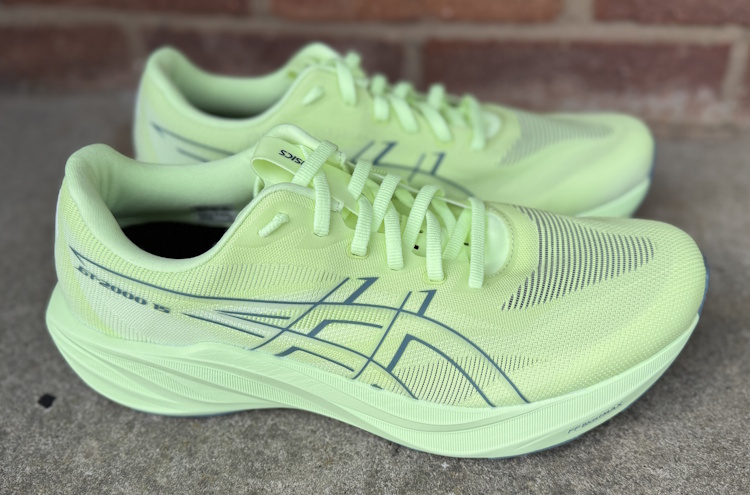
ASICS GT 2000 15
Stats
ASICS | GT-2000 15 |
|---|---|
Best for | Versatile daily support type trainer |
Support | Moderate Stability |
Cushion | Mid-to-high level cushioning |
Stack Height | 38mm heel 30mm forefoot |
Drop | 8mm |
Weight | Men 249g (8.8oz), Women 221g (7.8oz) |
Suggested Retail Price | $150 |
Fit | True to size |
Rating | 9.5/ 10 |
Design
The biggest update to the previous GT2000 model was the introduction of FF Blast MAX midsole. The same midsole foam used in the NOVABLAST offers a super-soft, almost bouncy ride with a trampoline-pod in the forefoot propulsion and toe-off.
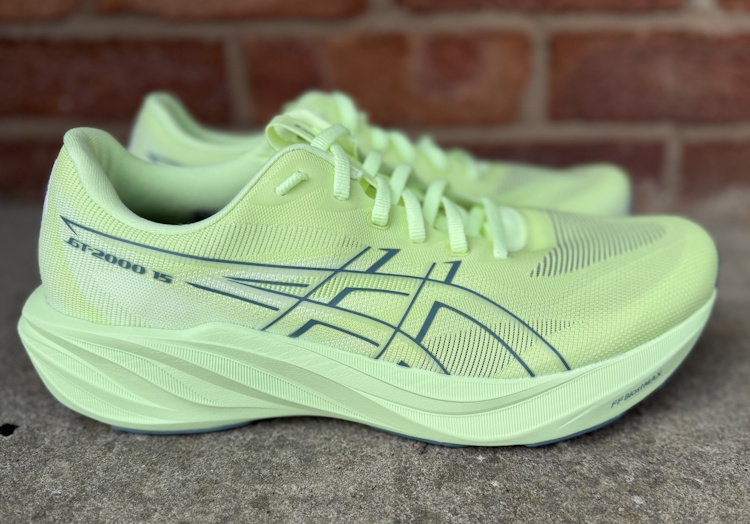
ASICS GT 2000 15 - Midsole
The new GT2000 v15 keeps the same FF Blast MAX midsole and adds another 2mm of stack throughout the length of the shoe for an even more cushioned ride. Not only do we get more cushioning, but ASICS has somehow managed to make the new model lighter!
The PureGel is still present in the heel, but again, I find it hard to tell if there is anything there at all. I don’t doubt there is Gel in there; I just wonder what such a small additional component adds to the shoe.
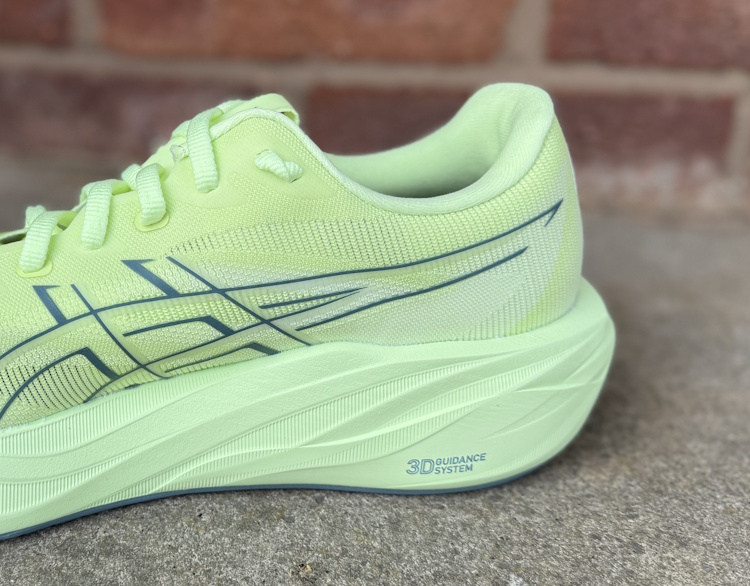
The 3D guidance system creates stability in the shoe without the need for a traditional medial post. There’s a slight medial flare to the midsole along with a straighter geometry of the foam from the heel, through the arch and into the forefoot, as well as deeper sidewalls. The overall geometry of the shoe appears to have increased a little over the previous model, with a slightly broader base.
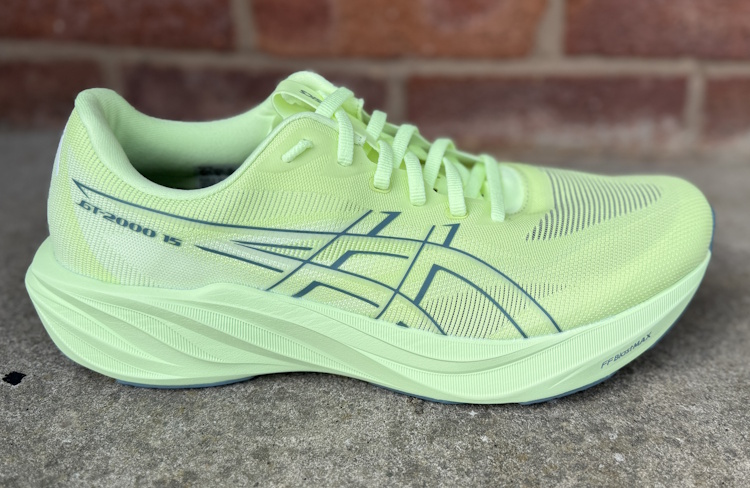
GT-2000 15
Shop Now at
Fit
I found the GT- 2000 15 to be true to size in both length and width. The shoes have a relatively high-volume toe box, but for me, it proved a good fit, and the revised upper is light, breathable and, as always from the brand, of good quality construction
Performance
The reduction of weight in the GT 2000v15, while only around 10%, was obvious to me when first pulling the shoes on.
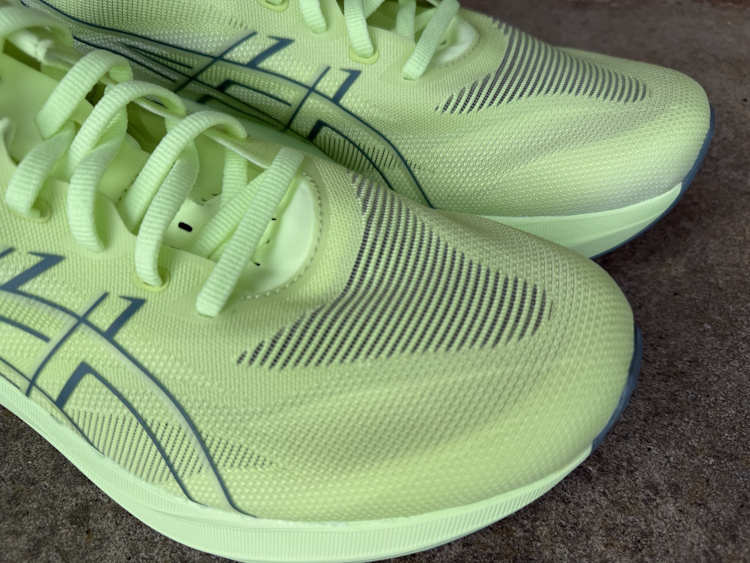
ASICS GT 2000 15 - Upper
Despite the larger volume of midsole, the shoe feels strangely lighter than its bulk suggests. The fit is neat and hugs the foot, and it seems to almost disappear around the foot.
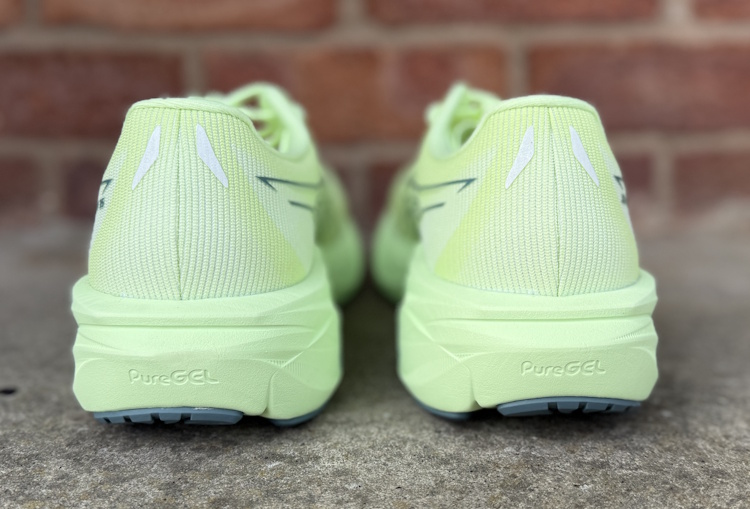
ASICS GT 2000 15 - Heel
The FF Blast MAX midsole is certainly a soft, springy and entertaining running experience and having managed to create this feel in what is essentially a support shoe, ASICS have achieved a real breakthrough. Proving that support shoes need not be heavy and clunky, the shoe is a joy to run in for those requiring support.
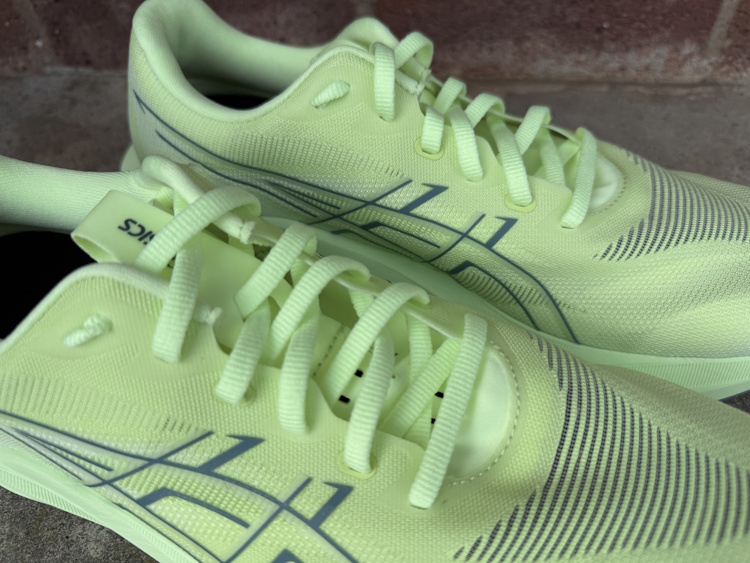
ASICS GT 2000 15 - Lacing
I found the plushness of the ride a welcome sensation on my long, easy-paced runs. The forefoot ‘trampoline pod’ adds a welcome toe-spring when picking up the pace and helps the shoe retain cushioning longevity over time.
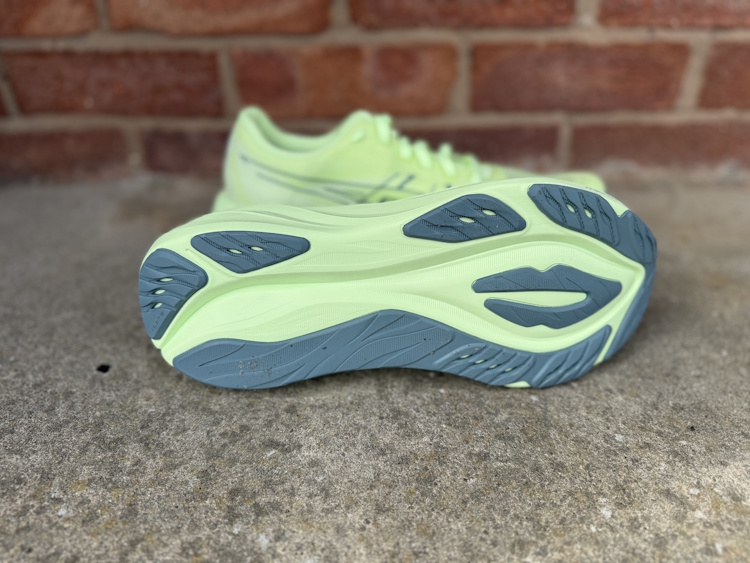
ASICS GT 2000 15 - Outsole
The support is effective, and while this isn’t the most controlling shoe on the market, it works well for mild to moderate overpronators. The broader base and revised geometry continue to do a good job in the stability department.
Comparisons
I would say the most obvious competitor models to the ASICS GT-2000v15 are the New Balance Fresh Foam X 860v15, the Saucony Guide 19 and the Mizuno Wave Inspire 22.
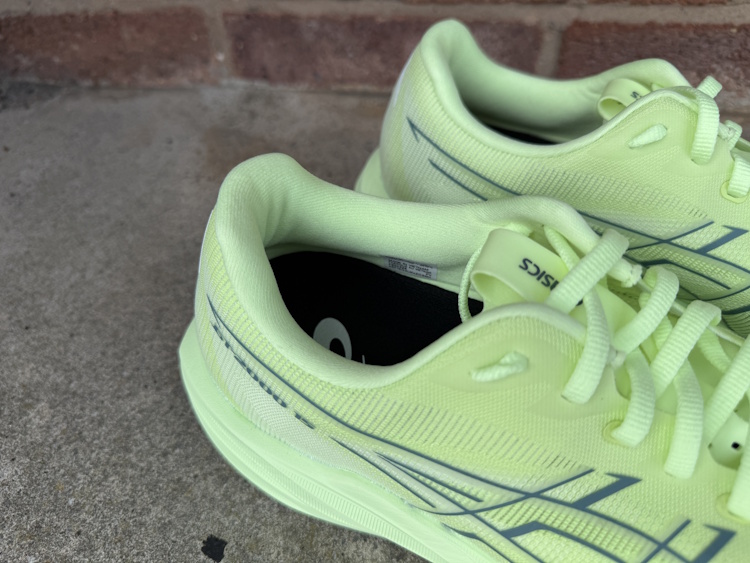
ASICS GT 2000 15 - Heel Collar
All these shoes are around the same price point, and I think all are aimed at the same customer, runners that overpronate and want a daily training shoe.
Saucony Guide 19
The Saucony Guide 19 is the same price as the ASICS, and in my opinion is a little more effective at controlling overpronation in a wider range of runners. I think it’s tricky to choose between the two shoes, so would simply say, choose the one you find fits your foot best.
New Balance 860v15
The New Balance 860v15 is a little more expensive, has a slightly higher stack of cushioning (40mm over the GT2000’s 38mm), but despite the extra stack feels a little firmer. I’d say the New Balance is a little more stable, and being a little firmer is simply an option for those who prefer that fit and feel.
Mizuno Wave Inspire 22
The Mizuno Wave Inspire 22 is a versatile support model that uses the brand’s Wave technology for control and cushioning. While as effective in use as the ASICS, I would opt for the Mizuno if wanting a shoe to deal with plantar fasciitis. The Mizuno feels a little ‘springier’ to me, whereas the ASICS feels softer, with a feeling of ‘sinking’ into the cushioning more. Again, it’s person preference on the feel of the ride.
All these shoes, including the ASICS, are great options as supportive daily running shoes.
My Verdict
I think that the new ASICS GT 2000v15 is a nice update to the GT2000 line and certainly worth selecting if you are a fan of the model.
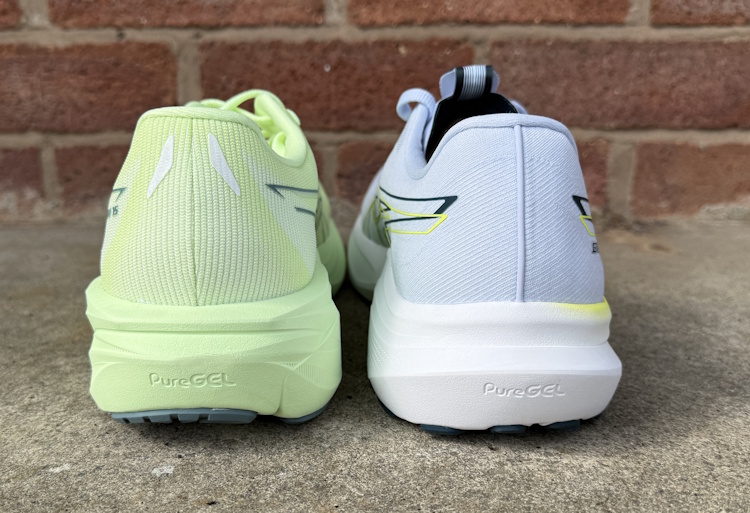
ASICS GT 2000 15 and GT 2000 14 - Heel
The reduction in weight and addition of cushioning make it a better shoe all around.
Control is subtle yet effective, and I have found the shoe great for daily miles and even the occasional tempo run.
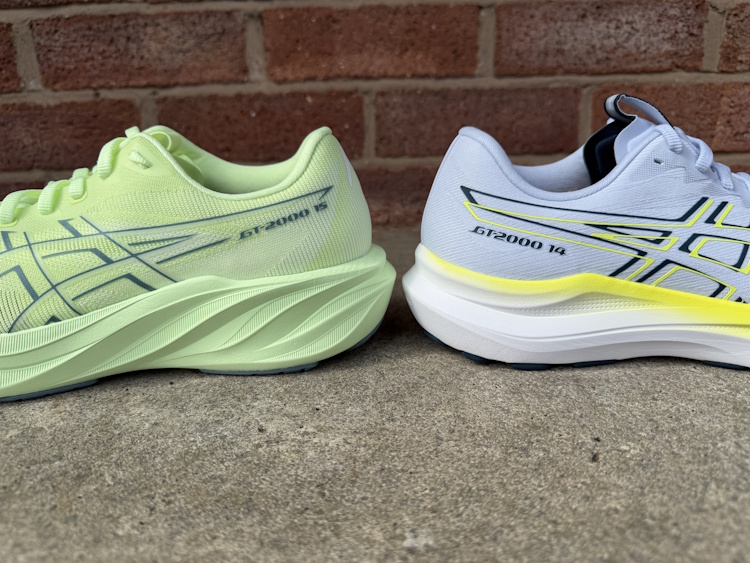
ASICS GT 2000 15 and GT 2000 14 - Heel Stack
The ASICS GT 2000 15 is a versatile training shoe that is now very competitively priced, making it a good choice for many runners.


Leave a Reply