By Noel Paine
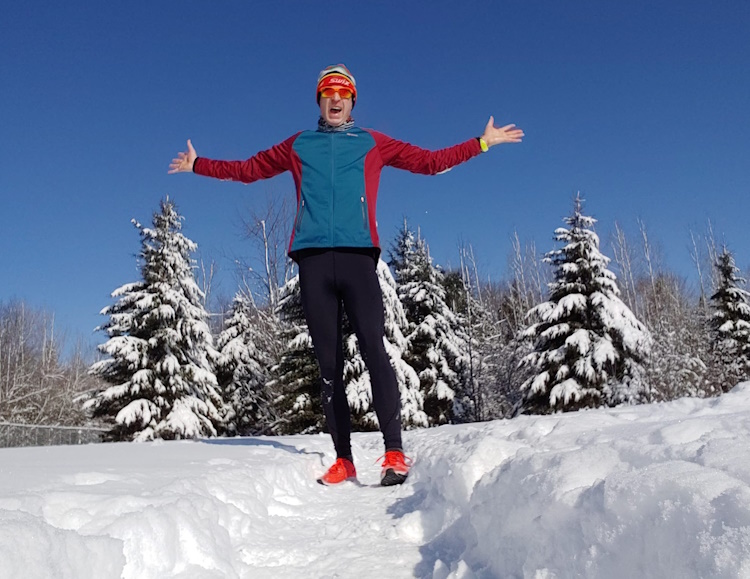
Winter in many parts of the world can be cold, snowy and sometimes icy. In North America especially, winters can be tough for many runners. Growing up in Canada, I have run through many cold winters and got out for a run on some very brutal days; having the right type of shoe helped!
If you click, or buy from, links on this page, we may receive compensation. Learn more

What Do You Need for Winter Running?
You need a shoe that works in cold, snowy, and icy conditions to keep your feet on the ground and help you train.
COLD – you need a show with less open mesh to help keep your feet warm.
SNOWY – less open mesh and a snug fit around the ankle will keep snow out.
ICY – You need an outsole with grip and good rubber that is not sticky.
SLUSH – less open mesh and a waterproof shoe can keep your feet happy.
We will go through a bunch of running shoe options to keep you training in whatever kind of winter you get where you are, but you can also add things like Icespikes to help out as well! They are an example of products you can screw into or strap onto your shoes to help you when it's slippery.
Beware that there are often fewer choices for winter running shoes with more grip or uppers etc, to keep your feet warmer or drier.
Winter Running Shoes - My Top Picks
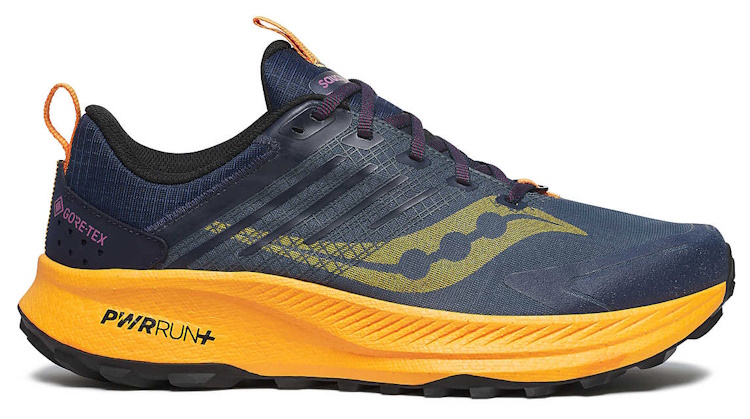
1. Saucony Ride TR2 GTX
If you already train in the Saucony Triumph, this is simply a waterproof version that uses a Gore-Tex upper to keep feet dry.
Also Available at
Saucony
This is a well-cushioned training shoe for someone who does not have any foot issues and likes a well-cushioned shoe and does not mind a bit more weight. Make sure to try this version on as sometimes a Gore-Tex upper can make the shoe fit a bit small. Also, although the shoe is waterproof, the outsole is not overly aggressive and could be slippery on icy roads.
This sort of replaces the Saucony Triumph 23 that now no longer comes in a Gore-Tex version. You get a similar type of cushioned shoe that is about the same weight (Gore-Tex Triumph was 10.6 oz) but lost the option of having a wide width option.
2. Saucony Peregrine 15 GTX
The lineup of waterproof shoes that are ideal for winter and running in wet and icy conditions has changed for 2025, going into 2026. The popular Saucony Kinvara remains in the lineup as a super lightweight trainer, but no longer has a waterproof version.
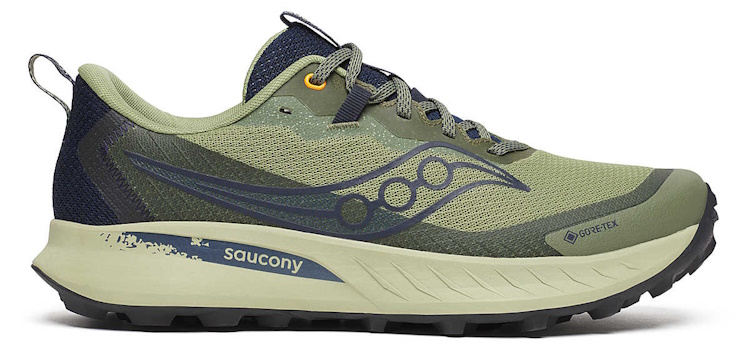
The Peregrine is a mid-weight, serious, neutral trail running shoe with good features, and now has Gore-Tex to keep your feet dry. The one similarity the Kinvara and the Peregrine do share is the drop (4mm), so if you liked the lower drop and closer to the ground feel of the Kinvara, the Peregrine is worth looking at.
If you miss the waterproof Kinvara, you still should look at the Peregrine; it could be a more stable, more protective running shoe for winter. The shoe is not only waterproof but also has the Saucony PWRTRAC outsole for exceptional durability and grip, and a forefoot Rock Guard shields your feet from rocks and hard bits of ice on the road.
*Remember as well that sometimes the waterproof upper on running shoes can make them a bit warmer.
3. Saucony Excursion TR17 GTX
Gone is the Rift from last year, and Saucony has replaced it with a more affordable, basic trail running shoe with two colour options with a Gore-Tex upper.
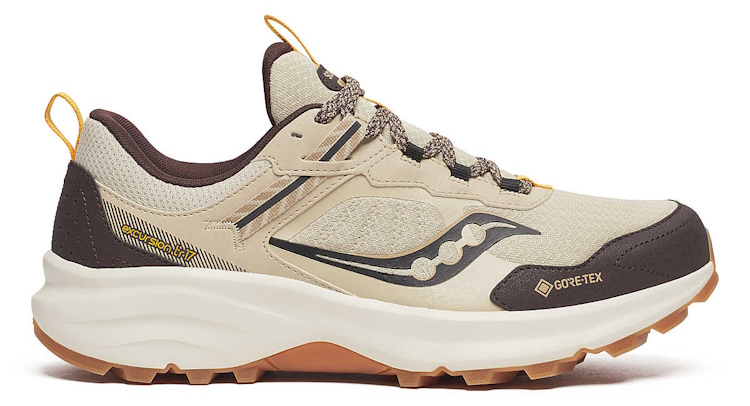
This shoe is somewhere between a walking/hiking shoe and a basic trail running shoe. The midsole is not overly thick but is cushioned. The outsole, although it has great grip and traction, looks more made for casual hiking rather than running. If your winters involve more walking and just worrying about staying on your feet and staying dry, this may be the affordable option for you.
4. Brooks Ghost 17 GTX
This is another Gore-Tex covered running shoe option that is meant to keep feet dry but can also work for winter running.

The Ghosty has been in the Brooks lineup for a while and this is just the version for wet weather. It’s a little heavier but the same price and the tread is the same as the regular version. The outsole is not super smooth but neither is it rugged.
The version 17 (of which I like the colour options better)(One featured and Black) is a more substantial and heavier version than the GTX version last year (10.1 oz) and the regular version has a slightly lower drop (12mm last year) but should generally have the feel of the Brooks Ghost model of running shoes.
This is a waterproof running shoe with substantial cushioning and good but not aggressive tread to keep your feet dry during winter runs.
5. Brooks Cascadia 19 GTX
A little less colour this year! This is the update from the Cascadia 18. This year, your Brooks Gore-Tex trail shoe is a lighter (0.2 ounces) and more expensive ($10 more).

The Cascadia is stable, has good cushion, has a rock plate in the midsole for trails (that also adds stability to the shoe) and would be a good option for a person looking to keep their feet dry and on the ground. The shoe is also $30 more than the non-Gore-Tex version.
You may not notice, but both the 19 version of the regular and GTX versions of Cascadia have a slightly lower drop, 6mm from last year’s 8mm. Another good dry, winter running shoe that will not show stains from wet snow and slush like some others!
6. HOKA Challenger 7 GTX
This shoe is described as a mix between trail and road, with HOKA’s signature light and thick EVA midsole combined with a rugged outsole for traction.

If you like the feel of HOKAs then this shoe might be for you. It has a thick midsole, lower drop, good traction and the signature heel pull tab. I was pleasantly surprised when HOKA shoes first came out and really like some of their models that work for my feet. I like the added protection without the weight.
This is a great light, waterproof running shoe with traction that is only $5 more than its updated regular version right now.
7. HOKA Clifton 9 GTX
Like other brands, HOKA has a cushioned training shoe with Gore-Tex for wet (or slushy) conditions that will keep your feet dry. If you need stability, there may be room for an orthotic or supportive insole.

Also Available at
HOKA
So the Clifton GTX will keep you dry but lacks the extra tread for slippery conditions. It is a bit firmer than the Challenger and a bit heavier than the normal version. I have worn an older version of the Clifton and quite liked it. The shoe is well-cushioned, fairly responsive and decently roomy.
The other HOKA models that you may also want to check out that will keep your feet dry (key aspect for winter running) are, the Transport GTX and the aggressive Speedgoat 6 GTX.
8. ASICS GEL-TRABUCO 13 GTX
This is the waterproof Asics trail shoe that would make a great winter running shoe. The model has been around for a while and works well for many people. I have worn the non-GTX version of this shoe and find it a solid shoe.

Also Available at
ASICS
I have worn many Asics and do like their lower-to-the-ground feeling, although like other companies, they are now making thick mid-soled shoes as well. This is a real trail shoe and, in addition to keeping your feet dry (and warmer), it has a rock protection plate and an outsole with good traction that uses their ASICSGRIP™ technology.
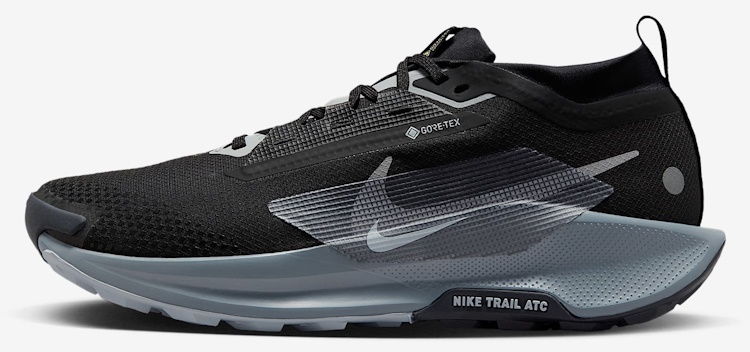
9. Nike Pegasus Trail 5 GORE-TEX
I am not a huge Nike fan, but they still often lead in innovation and still make some good shoes. I am throwing this shoe into the mix in case you are a Nike fan and a fan of the legendary shoe in their rotation (that has been there for a very long time), the Pegasus. The Nike Pegaus came out in 1983, making it one of the longest-running models for the company.
Also Available at
Nike
This option is not cheap, has less tread than some others (but still decent), but if your winters are mild or you just really like Nike/Pegasus but wouldn’t milder a warmer, drier option, this one is for you! The shoe comes with Nike’s GORE-TEX invisible-fit upper, ReactX foam midsole, and an all-Terrain Compound (ATC) rubber on the outsole.
The name Pegasus comes from Greek mythology — specifically the winged horse Pegasus, a symbol of speed, flight, freedom and power. Another Nike option is the Nike Juniper Trail 2 GTX.
Fitting Advise
Remember that some running shoes that use Gore-Tex or are winterized in some way – can fit a bit differently than a similar model if the material is firmer, more restrictive etc.; shoes can fit shorter or narrower. Always try them on.
Make sure there is enough toe room (thumbnail width) and the width is snug but not tight or sloppy. If at a running store, have someone measure your feet and check the fit.
Walk around the store if you have the opportunity, there should be no break-in period.
Stay Safe
Being tough is one thing, but it's also good to be smart. If the conditions are dangerous (too icy or cold) think about hitting the treadmill or doing some cross-training!
Other Winter Running Tips
If there is a risk of frostbite, try rubbing some petroleum jelly on exposed skin as an added layer of defence.
Forget fashion on super cold days and make sure your head and fingers are warm enough.
Socks like those from Smartwool for cold weather are breathable and warm – make sure you try on winter running shoes with the socks you think you will be wearing!
Dress in breathable layers. You do not want to be warm and sweat too much – remember you will warm up once you get going.
Make sure you are seen on dark winter days with reflective gear like Sugoi and brands like Proviz carry.
When you run in the winter you can get to and see and experience stuff you will not see any other time of year!
Pick the right type of winter running shoe for your feet and for the type of winter conditions you have.
*As a Canadian, Noel has run when it has been -30C and colder and has been to the Arctic.


Leave a Reply