By Paul Freary
The Brooks Addiction GTS 15 and Brooks Adrenaline GTS 24 both represent good value for money running shoes, offering effective support for overpronators.
The Adrenaline GTS 24 is perhaps the most popular shoe in this category from Brooks, thanks to its great value for money price point and versatility. It’s also a shoe that I’ve worn for as many years as I can remember.
If you click, or buy from, links on this page, we may receive compensation. Learn more
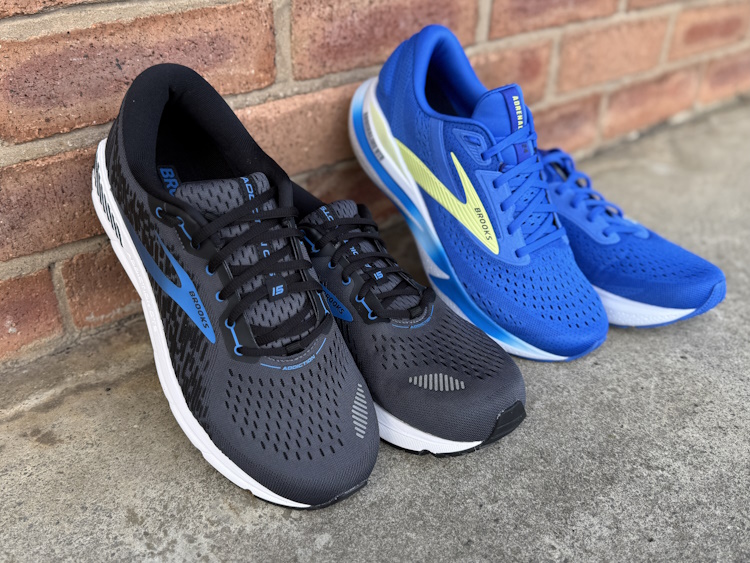
The Addiction GTS 15 is designed for individuals who need maximum stability and support. This model falls into the “motion control” category, a term traditionally used to describe the most supportive running shoes available, though it’s becoming less common in current footwear descriptions.
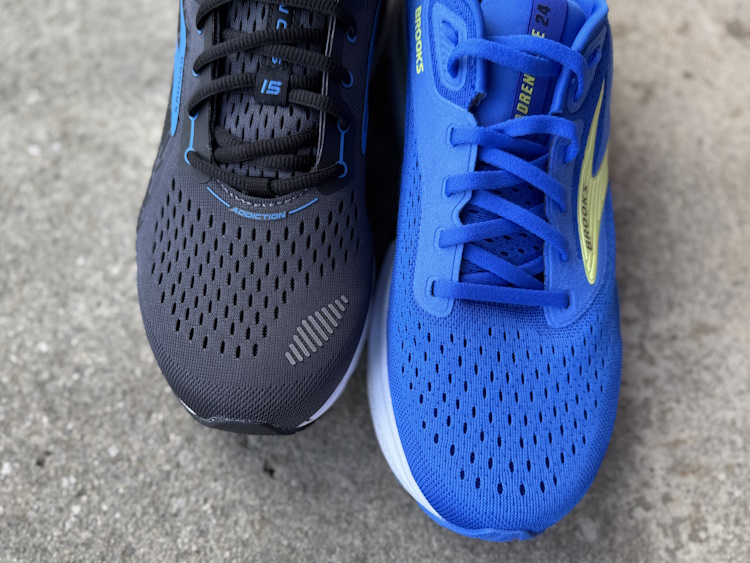
The Adrenaline GTS 24 offers a good value combination of cushioning and control designed for runners who want a daily trainer offering a good combination of comfort and stability. It’s a very well-established model and is one of the most popular shoes, especially in specialist running stores.
In my store, the Adrenaline is one of the most popular models not just in the support category, but full stop! But which should you choose? I aim to help you find out.
Stats
Brooks | Addiction GTS 15 | Adrenaline GTS 24 |
|---|---|---|
Best for | For Overpronators | Daily trainer |
Support | Supportive | Supportive |
Cushion | High, near max stack cushioning | Mid-height cushioning stack with support |
Stack Height | 36mm heel 24mm forefoot | 36mm heel 24mm forefoot |
Drop | 12mm | 12mm |
Weight | Men 345g (12.2oz) Women 314g (11.1oz) | Men’s 284g / 10oz Women’s 250g/ 8.8oz |
Suggested Retail Price | $140 | $140 |
Fit | True to size | True to size |
Rating | 8.5/ 10 | 9/ 10 |
Design
While the Addiction GTS 15 uses the brand’s BioMoGo midsole, an older midsole foam cushioning technology based on CM-EVA midsole, the Adrenaline GTS 24 uses Brooks’ most widely used foam, DNA Loft v3. This nitrogen-infused foam offers a softer, lighter and more responsive feel than CM-EVA materials and is quickly becoming the go-to foam for other manufacturers.
I found the difference between the cushioning of the two shoes noticeable right away. Preferring softer cushioned shoes, the Adrenaline wins here.
While I didn’t find the Addiction uncomfortable, the cushioning is the firmer of the two shoes here. That said, it is designed for a bigger, heavier runner who perhaps requires a much more durable shoe.
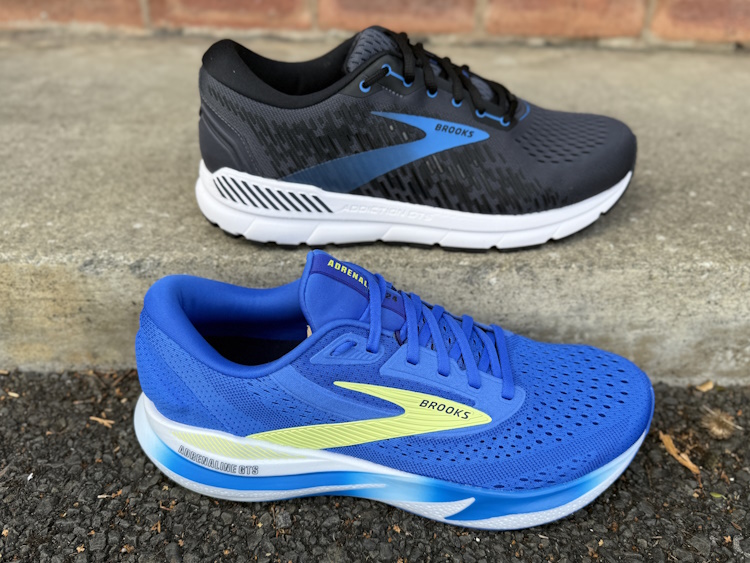
DNA Loft v3 provides a reasonably soft feel, but at the same time, manages to retain its shape and form, and in the Adrenaline GTS 24, I find it maintains my feet in a stable neutral footing.
Both models utilise the GuideRails Support System, GTS (Go-To-Support) from Brooks, which uses the GuideRail system to gently guide the foot into alignment and reduce excess movement, particularly for those who overpronate. It’s unobtrusive but effective, offering support only when needed.
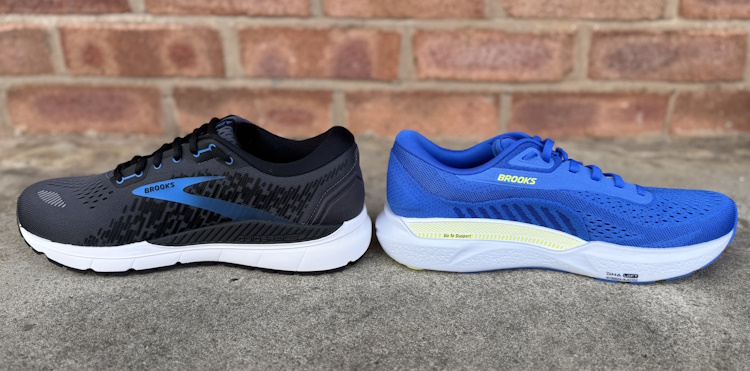
These ‘rails’ are an extension of the shoe’s cushioning material, which extends up the side of both the lateral and medial edges of the rearfoot. By creating a cupped shape to the cushioning, the foot sits centrally, within the shoe and is held in place should it excessively pronate.
Being part of the midsole cushioning itself, the GuideRails in the Addiction GTS 15 are a CM-EVA foam and in the Adrenaline GTS 24, DNA Loft v3 foam. The GuideRails in the Addiction are a little firmer and, as such, help reduce overpronation to a higher degree in a wider range of runners.
I’ve said in many reviews previously that I have been a big fan of the GuideRail system since its introduction, particularly due to the versatility it offers. I find the support offers me a naturally supportive ride without being intrusive.
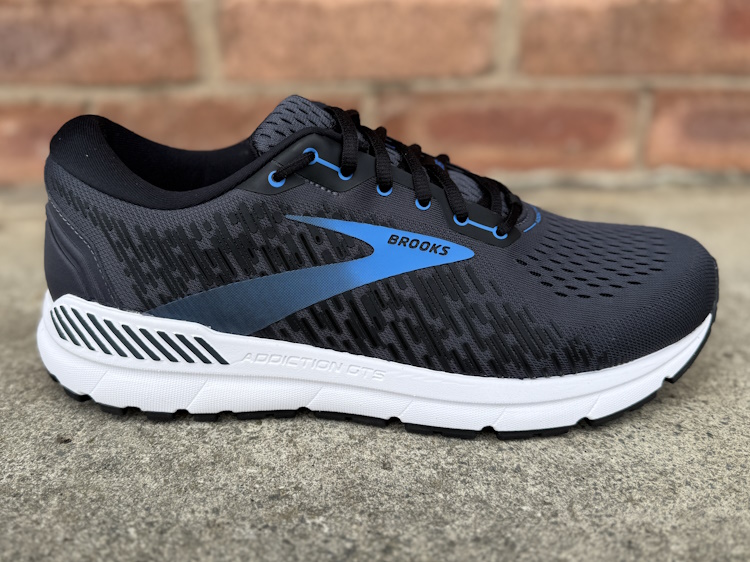
Addiction GTS 15
Shop Now at

Adrenaline GTS 24
Shop Now at
Fit
Both the Addiction GTS 15 and the Adrenaline GTS 24 fit true to size with a standard width that should accommodate most runners. The engineered mesh upper provides a forgiving fit that adapts well to foot shape, while still feeling secure through the midfoot and heel.
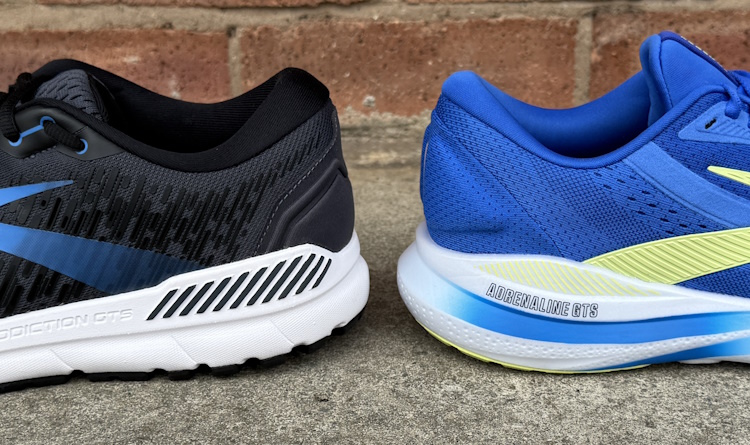
The Adrenaline GTS 24 has a slightly slimmer fit in the forefoot, but it’s only marginally and perhaps due to the upper engineered mesh construction rather than general dimensions.
Both shoes are good options for orthotic wearers as they have a good, flat base within the shoe once the sockliner is removed. The Addiction is slightly roomier, with a slightly straighter last, so more suitable for those with more substantial devices.
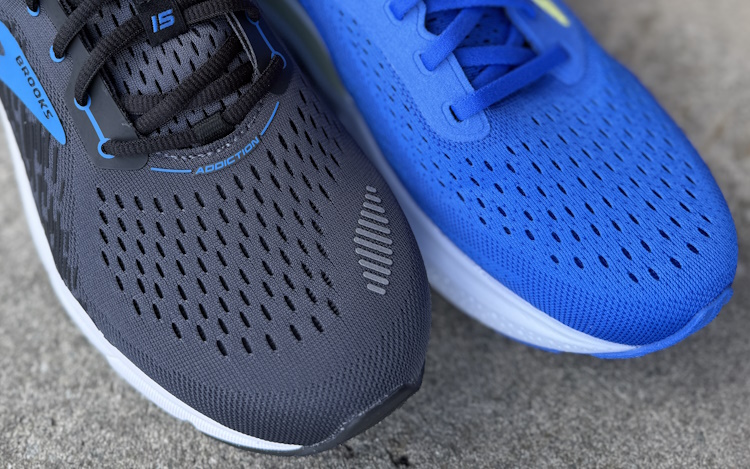
Both the Addiction and Adrenaline, like many Brooks models, are available in a variety of width fitting options, so again, versatile options for a wide range of runners.
I found both shoes fit my slim-to-normal width and volume foot very well, and I found them both instantly comfortable. The Addiction has a little more volume to its overall fit, but generally speaking, I found them true to size.
Performance
In contrast to more traditional stability shoes like the Addiction GTS 15, the Adrenaline GTS 24 offers a more up-to-date, responsive ride. The Adrenaline doesn’t shout support shoe; instead, it blends its structure seamlessly into the midsole cushioning for a naturally balanced ride. For me, the Adrenaline is the more natural feeling ride.
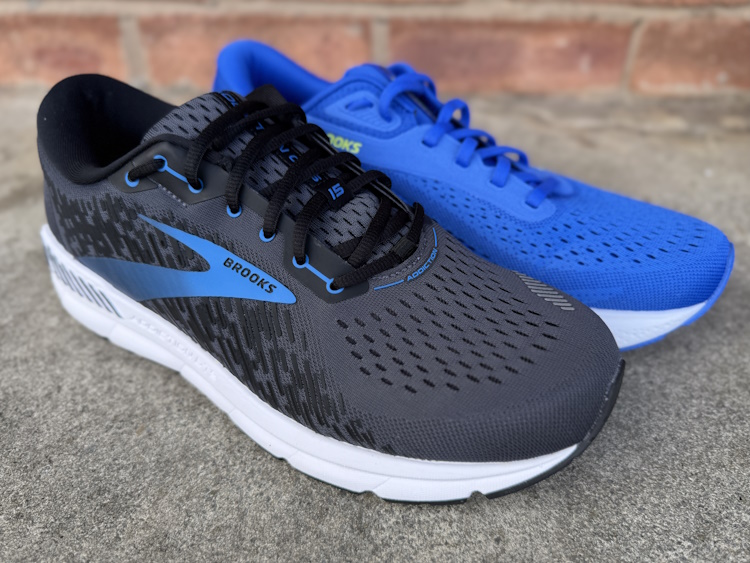
The DNA Loft v3 midsole is the significant difference between the two shoes here. I felt it offered a softer step-in feel but remains resilient enough for my daily training. For runners like myself, who may find firmer stability shoes too harsh or unforgiving, the Adrenaline GTS 24 offers a more cushioned, accommodating ride that maintains good stability and durability.
The Addiction GTS 15 is aimed squarely at those requiring the highest level of control, and it excels in this area. The broad midsole base, the GuideRails and the straighter last of the midsole contribute to keeping the foot in a neutral position throughout the gait cycle.
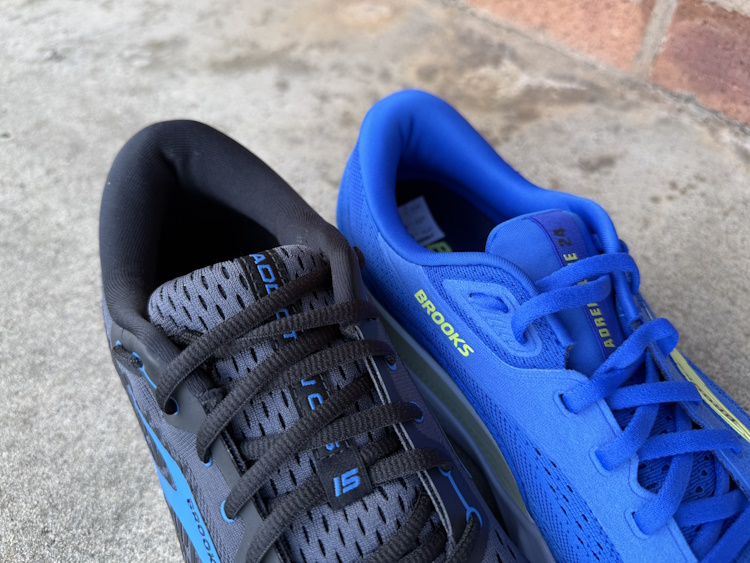
The ride is incredibly stable, and while the cushioning is on the firmer side, especially when compared to the Adrenaline GTS 24 and the even softer Glycerin GTS 22, it’s very runnable and, for the heavier runner, will provide a good, durable base.
Although not a shoe aimed at my natural running gait, I found the Addiction perfectly runnable, and its stability is very obvious.
The Addiction GTS 15 isn’t the most responsive model, so don’t expect to break any records in it, but for control, it’s one of the best around.
My Verdict
The Brooks Adrenaline GTS 24 is a great value all-around training shoe for a very wide range of runners, and it’s one of my all-time favourites!
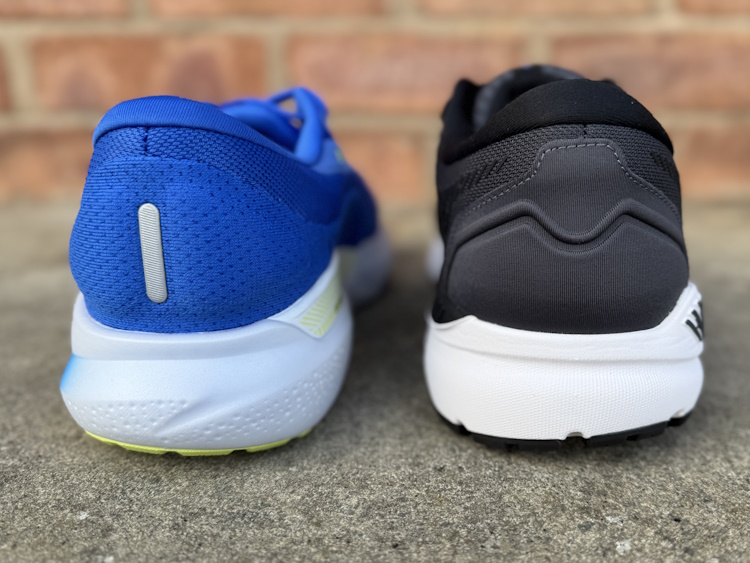
Suitable not only for overpronators, but also for those who supinate to a small extent, the nature of the support provided by the GuideRails offers a versatile option to a very wide range of runners. In my store, the Adrenaline is a very popular shoe in the support category.
Compared to more traditional motion control shoes such as the Addiction, it offers a softer, more flexible and more responsive ride, perfect for those seeking stability without sacrificing underfoot comfort.
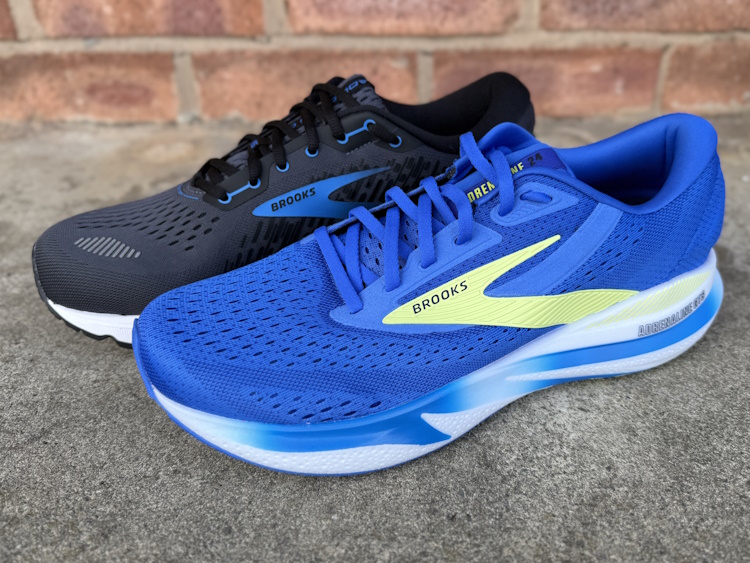
The Brooks Addiction GTS 15 excels as more of a niche running shoe, prioritising stability and durability. It provides exactly the qualities crucial for severe overpronators.
Whilst it may be a heavier shoe than the Adrenaline GTS 24, the added weight is due to its better ability to provide a durable base of cushioning and control.
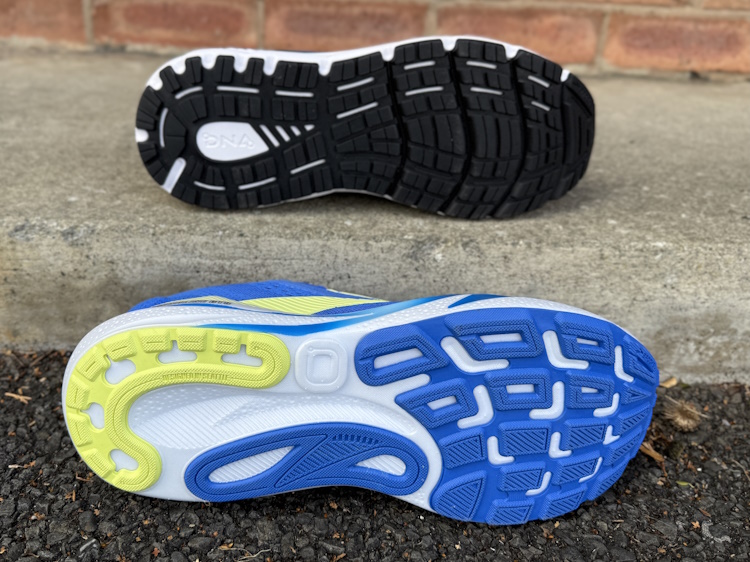
The price difference between the shoes is marginal, and as such, try not to allow it to be too much of the deciding factor between the two shoes.
If support and control are your number one priority, then the Brooks Addiction GTS 15 makes a great shoe that you can feel confident and comfortable in.
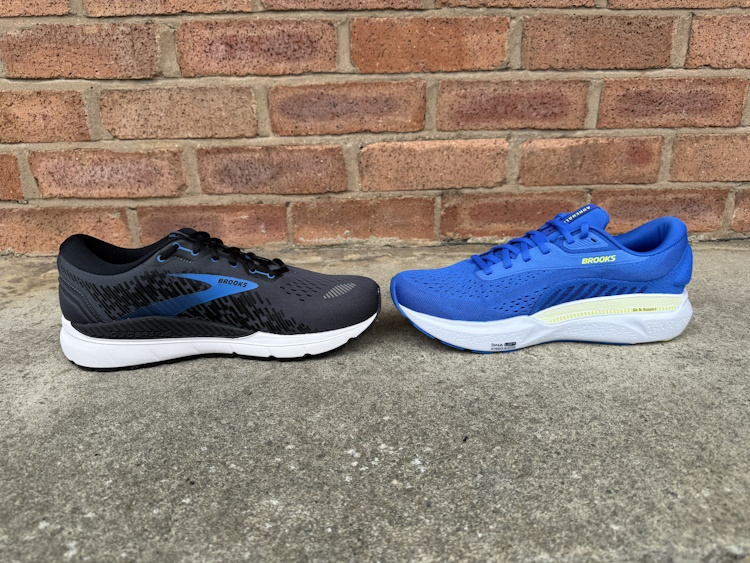
In short, for maximum control, go for the Addiction GTS 15, and if you require a more naturally balanced, versatile and good value model, choose the Adrenaline GTS 24.


Leave a Reply