By Noel Paine
In just five years, running shoes have undergone more significant changes than in the previous two decades. Where once racing flats hugged the road at 10–20 mm of foam, today’s elite marathon shoes hover near the 40 mm legal maximum set by World Athletics (WA). On November 1, 2024, WA extended its sole-thickness regulations to the track: 20 mm max for spikes, 40 mm for road racing shoes.
Recently, Adidas released a road shoe, the Adizero Evo Prime, with a stack height of 60mm (6 cm). My first thought is that's bloody ridiculous, but is it? I have been running for over 38 years and have seen running shoes change, especially the super-light ones (racing).

Regular Stacked vs High Stacked Running Shoe
I wore the thick-soled HOKA running shoes when they came out and have tried a few super shoes, but I am too old now to really evaluate whether they would have made me faster in my prime or are even better than what I wore in the past. The elites and times on the world stage, though, seem to indicate they are doing something! Do they make you faster?
These rules are locked in the new landscape. Road racers are designed right at the edge of legality, while trainers and ultra-distance shoes now push even higher, into 50–60 mm “mega-stack” territory—popular with everyday runners, though ineligible for sanctioned races. I wanted to do some research, though, to find out if more is better and why the rules might be in place.
Does Height Equal Speed?
The Science - Economy Gains Are Real—but Nuanced
Since 2018, multiple studies have shown that compliant foams (like PEBA), paired with carbon plates and rocker geometry, improve running economy (RE). Early lab work suggested ~4% better efficiency; large-scale field analyses now estimate ~1% faster marathon times for elite men, and ~2 minutes saved for elite women. So, the super shoes work – but how beefy should the midsole be – to make me fast?
40 mm vs. 50 mm - No Extra Boost
A 2024 study compared 40 mm and 50 mm prototypes: both improved RE compared to a traditional flat, but no added physiological benefit came from the extra foam. Comfort ratings even dipped slightly at 50 mm. So, beefier may not be better?
Systematic Reviews Agree
A 2025 review concluded: thicker soles reduce impact rates and lengthen stance time, but stack height alone does not improve economy. Materials and stiffness tuning matter more. I assumed this, but it was good to do some research and find out that although a super light, cushioned midsole helps, the guts and design of the shoe are what seem to really count.
Let's Look at Some of the Thickest Shoes!
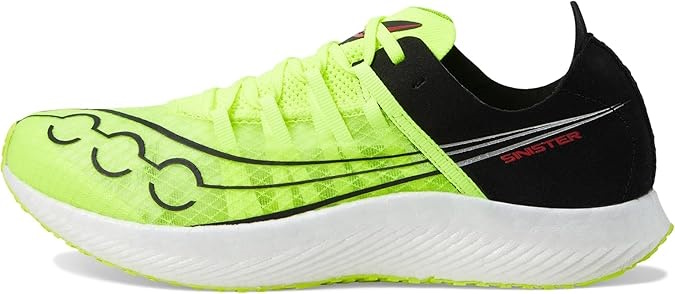
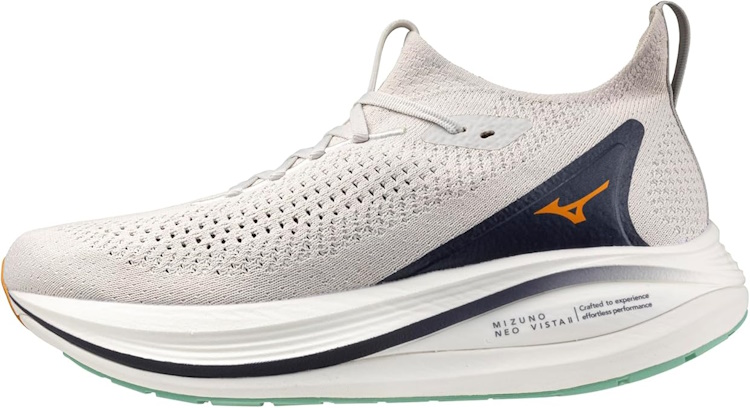
Running shoe | Heel StAck Height | Notes |
|---|---|---|
~50 mm (lab ~46 mm) | Not WA-legal (>40 mm). Radical 3-layer foam + dual plates; marketed as a “super trainer.” | |
51/43 mm (spec; lab ~44–46 mm) | Max-stack trainer. Not WA-legal at listed spec. Designed for long training comfort. | |
48/43 mm (brand) | Massive foam platform with a plate. Daily/max trainer, not racing-legal. | |
46/38 mm (spec; lab ~43 mm) | High-stack plated trainer. Soft NITRO foam; WA legality varies by size. | |
46/40 mm (spec) | “Super trainer” build. Reviewers note borderline WA-illegal at larger sizes. | |
46/38 mm (reviewed) | High-stack lightweight trainer; geared for up-tempo runs. | |
~45 mm (lab ~43 mm) | Popular plated trainer; over WA cap at larger sizes. | |
~45 mm (reviewed) | Plush max-cushion daily trainer. Not a racing shoe. | |
~45.6 mm (lab; spec ~42 mm) | Hybrid super-trainer with plate. WA legality depends on size. | |
~44 mm (spec/review) | Tall everyday trainer; no plate. Maximal cushioning focus. |
By Distance - Where Stack Matters Most
So, is a certain stack height better for a certain race distance? This is what the research seems to say.
I just finished watching the 2025 World Championship marathon races in Tokyo. This is what they wore. And to make things more interesting as you read, keep in mind that in 2001 (before supershoes), at the World Championship Marathons, the top three times for men and women were: Women: 2:26:01, 2:26:06, 2:26:18 and Men: 2:12:42, 2:12:43, 2:13:18.


*Remember that most of us are not light, efficient world-class marathoners.
Biomechanics & Injury Risks
High stacks change mechanics. Some studies found increased leg stiffness and higher impact peaks when switching to maximalist shoes. Others noted altered ankle/knee moments and longer ground contact. Comfort is often improved—but not universally. Runners with narrow feet or instability issues may struggle at extreme heights.
Advice: Comfort and fit are still the best predictors of long-term success in any shoe, regardless of stack.
The Consumer Story - Perception vs. Reality
In the public imagination, “taller = faster” has become the shorthand. Yet the science shows that stack height is an enabler, not a magic bullet. Without resilient foams and tuned stiffness, extra millimetres of foam add weight without speed.
For the industry, stack height reshaped product lines, created a luxury training segment (50+ mm daily trainers), and cemented the 40 mm “super-shoe” as the modern racer. For those entering the run nig world in the last few years, they have probably never seen a more minimal race shoe, and there appear to be fewer and fewer options.
Science and research have given us lighter and lighter cushion and carbon fibre, and other additions to running shoes that do appear to improve performance for some runners, but remember it's not an exact science. The new shoes are designed for the biomechanically perfect foot, a lot of the time, and a runner who runs on their forefoot and is a light, efficient runner. This may not be you.
Practical Guidance



Key Takeaways
- 1Stack height surged since 2020, now stabilized at WA caps (40 mm road, 20 mm track).
- 2Performance gains (~1%) are real, but driven by foam + geometry + stiffness, not height alone.
- 3Going above 40 mm offers little short-term benefit, though comfort may improve.
- 4Distance matters - High stacks suit marathons, lower stacks may shine at shorter races.
- 5Fit first - Runners respond differently—comfort and stability trump specs.
Stack height can help make you go faster, if it’s the right stack height for you and what you are racing! Ultimately, it comes down to what works. Find a shoe that seems suited to the event you plan to train and race in. Make sure it fits and feels good, and if it feels like it's improving your performance, go with it.


Leave a Reply