By Kieran Alger
The Adidas Boston 13 and the ASICS Superblast 2 are both designed to eat up most of your daily training mileage. The Superblast 2 is a much-heralded all-rounder while the Boston 12 was a popular partner to the Adidas Adios Pro 4 and the Boston 13 builds on that heritage.
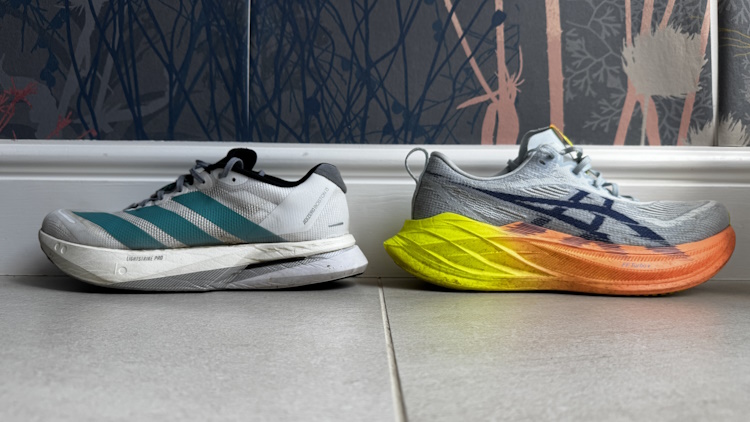
However, these trainers take two very different approaches to catering for your daily runs. The ASICS Superblasts 2 is a big, soft and max-stacked beast, the Boston 13 shoots for a lower-to-the-ground, more direct and compact ride. So which is the best running shoe to add to your rotation?
Read my Adidas Boston 13 vs ASICS Superblast 2 review to find out.
If you click, or buy from, links on this page, we may receive compensation. Learn more
Stack Height, Drop, Weight and Price
The Adidas Boston 13 stack height packs 36mm in the heel and 30mm in the forefoot, for a 6mm drop. The ASICS Superblast 2 ramps the midsole wedge up a notch with 45mm in the heel and 37mm in the forefoot for an 8mm drop.
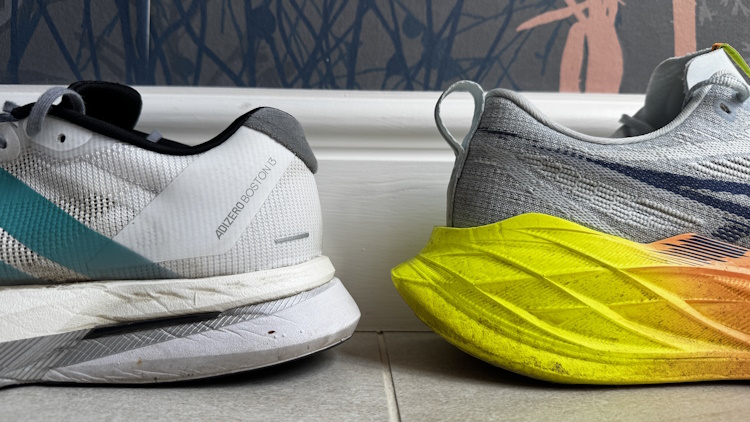
On weight, in a UK 8.5 / US9, the Adidas Boston 13 lands at 9.1.oz or 259g while the ASICS Superblast 2 comes in at 8.9oz / 254g in a UK 8.5 / US 9.5.
When it comes to price, the ASICS Superblast 2 comes at a premium. It’ll set you back $200 while you’ll pay $160 for the Adidas Boston 13.
Stats
Running Shoes | Boston 13 | Superblast 2 |
|---|---|---|
Best for | Fast training daily miles | Fast training daily miles |
Support | Neutral | Neutral |
Cushion | Medium cushioning | Max cushioning |
Stack Height | 36 heel | 45 heel |
Drop | 6mm | 8mm |
Weight | 9.1oz / 259g | 8.9oz / 254g |
Suggested Retail Price | $160 | $200 |
Fit | True to size | True to size |
Rating | 9.1/ 10 | 9.5/ 10 |
Design
The Adidas Boston 13 and the ASICS Superblast 2 are designed to take care of the bulk of your daily mileage. Built with enough versatility and balance to cope with everything from easy to the faster efforts.
The ASICS Superblast 2 has a max-stack, wide platform with a dual-foam set-up, combining a full-length layer of the brand’s Flytefoam Turbo Plus (the same foam used in the ASICS Metaspeed range) with a slab of Flytefoam Blast Plus Eco foam. There’s no plate.
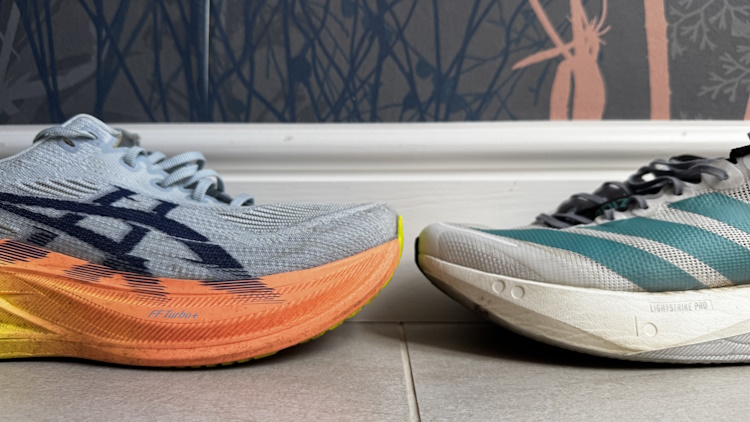
The Adidas Boston 13 also deploys the dual-foam design with Lightstrike Pro top layer and stability-boosting Lightstrike lower down. There’s now more Lightstrike Pro foam under the forefoot than we got in the Boston 12. That aims to give it a snappier feel. And the whole package is notably narrower and more compact than the Superblast 2.
Up top, the Adidas Boston 13 features new engineered mesh uppers. Some runners found the Boston 12 were a bit too minimal in the heel package but the tongue and heels now have more padding to add more training shoe comfort, for longer runs.

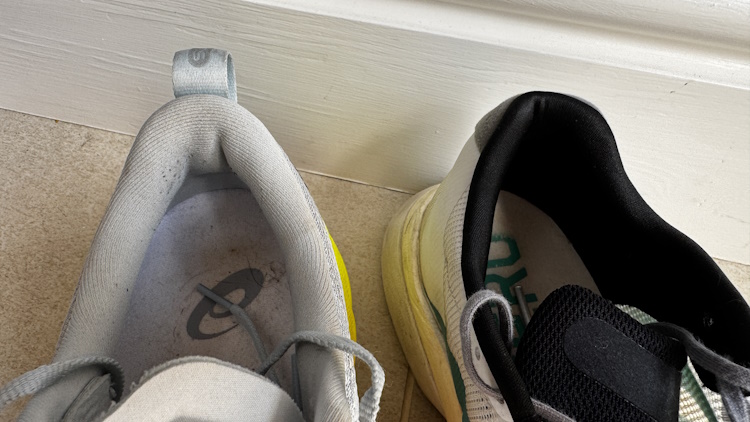
The ASICS Superblast 2 has an excellent engineered mesh upper that intelligently adds tighter-knit structure in some places and leaves flex and breathability in others. The heel collars shoot for thicker padding for a more plush heel hold.
Both shoes have gusseted tongues. The Superblast 2 tongues are thinner, flatter and more wrapping, while the almost-knitted tongues on the Boston 13 are thicker.
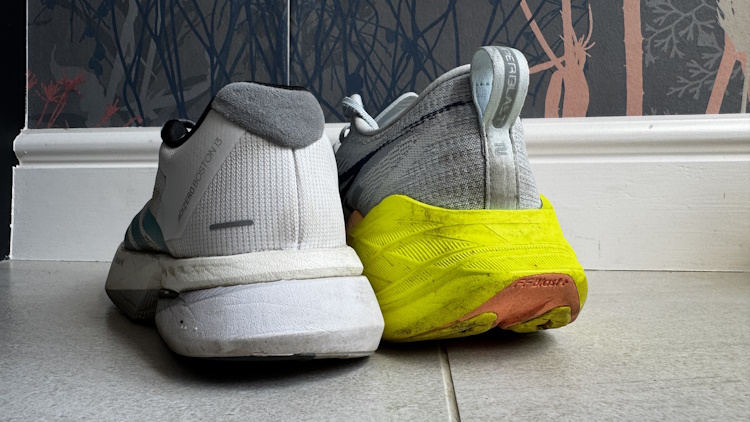
The Boston 13 outsole has a good covering of rubber with big pads of Continental in the main forefoot strike area and a back heel pad with Lighttraxion rubber elsewhere. The Superblast 2 uses ASICS’s grippiest outsole rubber – AHAR Plus. It’s thicker but more strategic with the coverage.

Boston 13
Shop Now at

Superblast 2
Shop Now at
Fit
In testing, I ran in my regular UK size in both brands which is an 8.5. In the US that’s a 9 in Adidas and a 9.5 in ASICS.
The fit is very different. The Adidas Boston 13 has a markedly more hugging almost race fit with significantly less room in the toe box. The ASICS Superblast 2 is really generous into the forefoot with loads of clearance lengthwise and across the top of the toes. It might even feel a little too spacious for some.
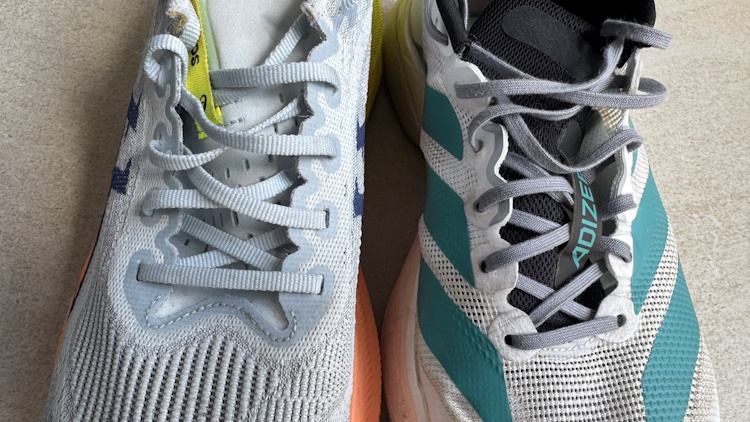
I had no problem with midfoot lockdown or heel security in either, though the Superblast 2 has a little more plushness in the heel padding which might benefit some over longer miles.
If you were thinking of taking the Boston 13 beyond 90 minutes I’d recommend a half a size up. If you like things more snug, I might recommend dropping half a size in the Superblast 2. But generally speaking, for regular training runs up to an hour, I was happy sticking true to size in both shoes.
Performance
In testing, I’ve logged north of 50 miles in both shoes, pushing them across a range of paces and sessions. Everything from easy recovery runs, right up to 5km pace intervals.
My longest run in the Boston 13 took me up to 90 minutes on feet. Meanwhile I’ve taken the ASICS Superblast 2 up to 3.5 hours. Most of that was on the road but with some outings on light off-road.
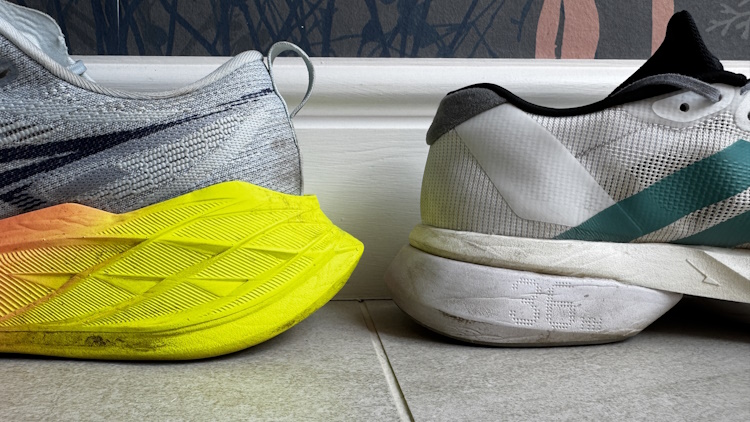
These shoes are markedly different. Although they’re targeting similar runs, they're kind of chalk and cheese. The Superblast 2 is big, higher stacked, much softer with much more bounce coming back.
You get a deeper sink into that midsole foam and more springback energy when it returns. There's also much more cushion in the heel. So if you're a heel striker, and you land further back, the Superblast 2 offers more protection in the landing.
For such a high stack shoe, the Superblast 2’s big wide base offers some reliability underfoot but it's not as consistent, reliable and stable as the firmer, almost blockier, Boston 13.
You will need to like a bigger shoe to get on with the Superblast 2. If you like things more precise, more agile, more nimble, the Boston 13 is the way to go.
The Boston 13 ride relies much more on a quicker pickup. There's not a lot of compression in that midsole, everything returns fairly immediately. It can feel blocky by comparison to the Superblast 2.
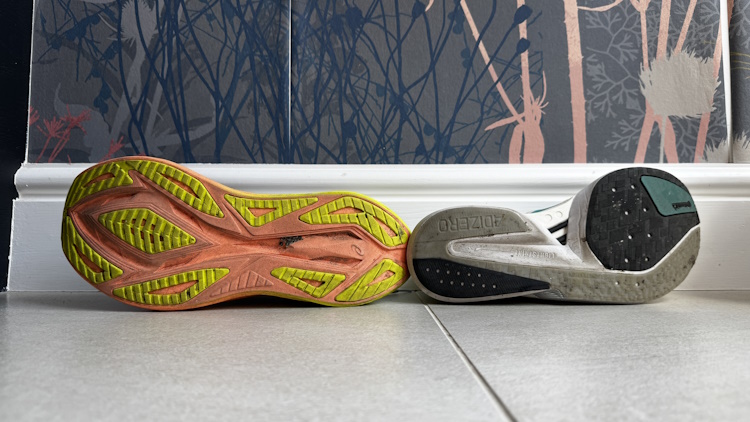
The Boston 13 leans more into a mildly springy, responsiveness with a firmness. The base Lightstrike foam makes for a grounded, structured platform that offers a balance of cushion and stability.
It’s not a big bouncy ride and even might be a shade blocky. But that brings good stability with just enough versatility to handle endurance miles, as well as faster sessions.
If you like a shoe that encourages quicker foot turnover and doesn’t coddle your stride, the Boston 13 delivers. It handles mid-to-uptempo paces well and still offers enough cushioning to take the sting out of the road – up to a point.
My Verdict
These are both capable daily trainers that can handle a range of paces and cater for shorter and longer mileage. The decision here will come down to whether you like a firmer, snappier, more responsive ride. Or you want that soft, bouncy big cushioned energy. If it’s the former, the Adidas Boston 13 is the shoe for you. If it’s the latter, the ASICS Superblast 2 is the best choice.
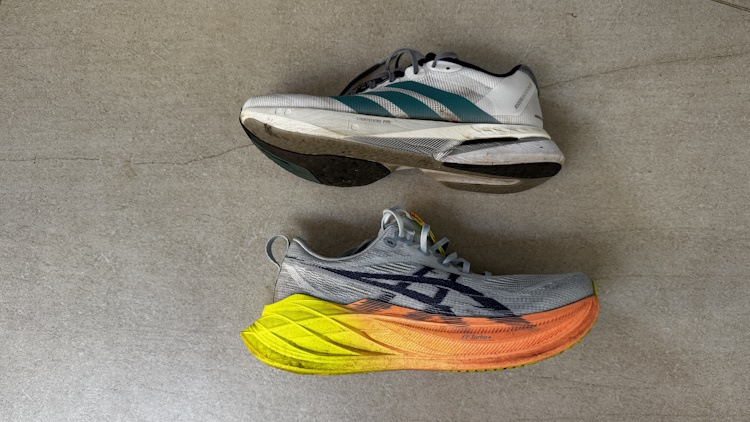
The Superblast 2 is probably the better longer distance shoe. If you’re looking at long hours on feet, those big 16-20 mile marathon training runs, the Superblast 2 cushion is better at softening the road. The more compact, racy ride of the lighter Boston 13 suits shorter, faster efforts better.
It can cope with slower recovery but the Superblast 2’s softness is better suited to heavier landings. Likewise, the Superblast 2 can handle faster efforts but only if you don’t mind a bit more general heft. In the middle of that both shoes are excellent cruisers, just with a different ground feel and feedback.
If I had to choose one shoe as the best all-rounder to suit a wider range of runners, it’d be the Superblast 2. I also like the fact it’s not plated. Although if you get on with the ride profile of the Boston 13 – and you’re looking for a good partner for the Adidas Adios Pro 4 carbon racer, the Boston 13 is a good option.


Leave a Reply