By Noel Paine
I have been a runner for a long time (more than 38 years) and have worked at a couple of specialty running shops, as well as in the field of Pedorthics (orthotics). I have seen a lot of feet and tried fitting many shoes to different kinds of feet over the years. With only a limited number of brands and models of running shoes, and most following a similar general shape and format, there can be foot issues that make a perfect fit challenging.

Don’t fight with your laces, make them work for you!
One way to adjust the fit of a running shoe is through various lacing techniques.
Here are some lacing techniques and the foot issues they can help with:
5 Different Shoe Lacing Techniques
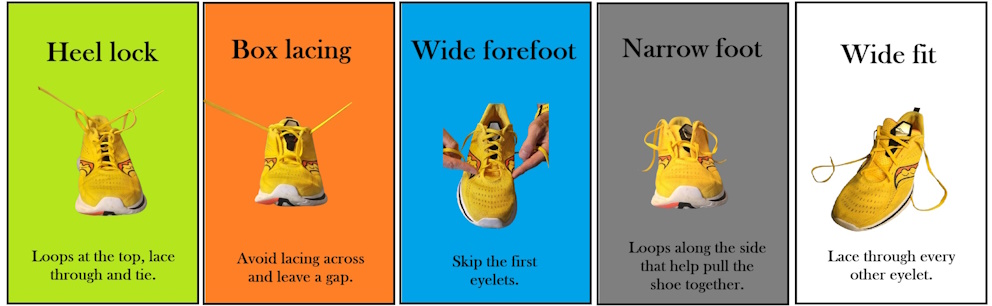
1. Heel Lock / Runner’s Loop
This is a lacing technique I frequently used when fitting people for running shoes. A lot of people, including many women, often complain about narrow heels or feeling like the heel of the shoe is wide or not snug enough. This can be a real foot issue, or someone just used to wear tight shoes or dress shoes etc. – that fit much more snugly than a running shoe should, but make the shoe feel sloppy for the wearer.
This can be a quick fix for some.

It is essentially making a loop at the last eyelet (hole) and then lacing your shoelace through that, and then making a bow or knot.
“More than two-thirds of the population has one foot that's larger than the other. This rarely exceeds one-half size. However, this should be considered when buying new shoes.” – Mayo Clinic
2. Window Lacing / Box Lacing
This lacing technique is about avoiding crossing laces over a sensitive spot or just making room.
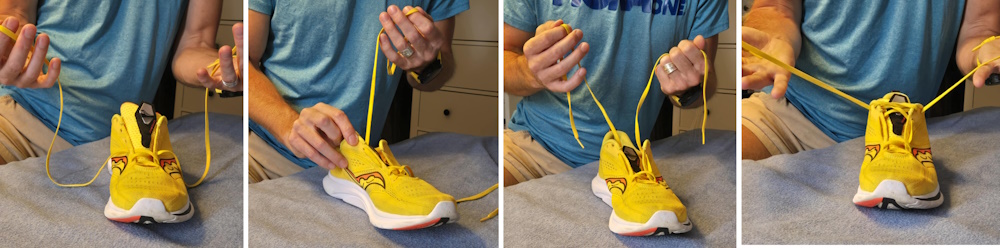
This is also another common lacing technique I have used. It is often helpful with someone who has a high instep (often associated with a high arch, or pes cavus foot). It is really just avoiding lacing across the sensitive area.
This lacing technique can be used to avoid a sensitive area on the top of the foot or for someone with a high instep (arch).
“Remember the foot is the most complex bony structure in your body (and that is not counting the muscles, ligaments and tendons). Your feet are unique, so the shoe that works for your friend may not work for you.” – Noel Paine
3. Wide Forefoot / Toe Box Relief
This is a great way to make room for a wide foot, bunions or even just the side of the shoe rubbing on the toes when you snug the shoe up and tie it to get out for your run.
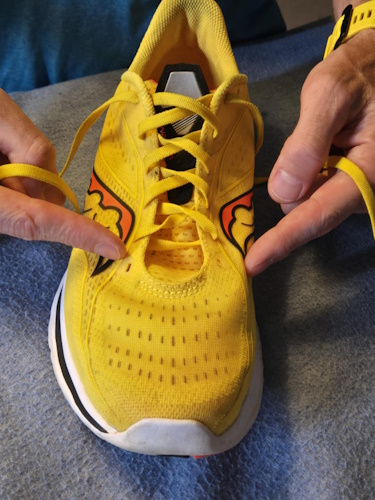
This is probably the easiest lacing technique, but often, for some reason, people do not think of doing it. If you have a wide foot or need for more room at the forefoot of the shoe, and even a wide version of the running shoe you are trying is not enough (or not available), then simply start lacing up after the first set of eyelets (holes for laces) or even jump up two, whatever you need.
“Your shoe should fit snug, not tight or sloppy, and there should be no break-in period.” – Noel Paine
4. Narrow Foot / Lock Lacing
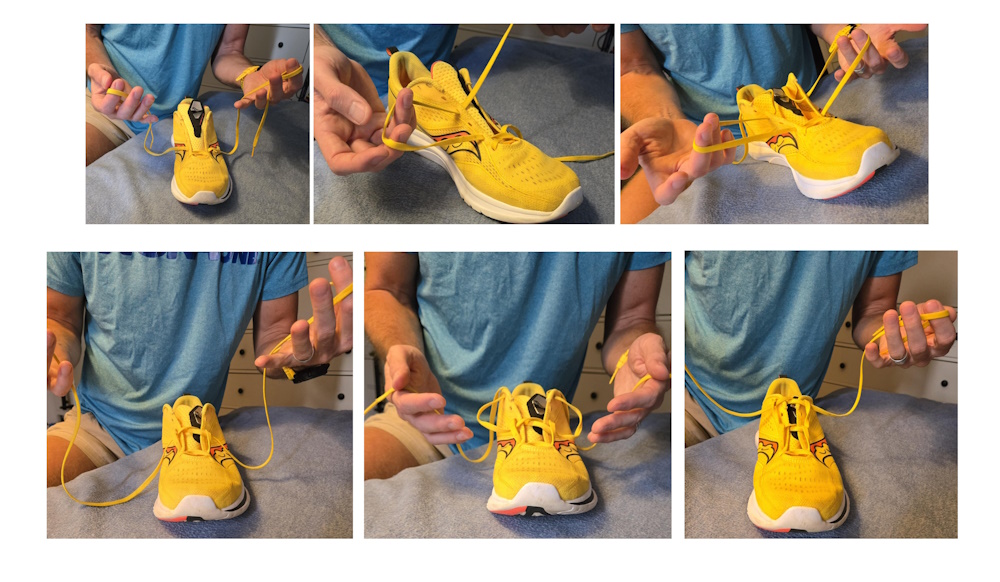
This is a lacing technique I have not used that often, but it is an option to try and pull the shoe together a bit more when someone has a narrow foot. However, I always try and get people to try multiple models of shoes instead of trying to fiddle around too much to make a shoe fit, if possible.
“Even with all the best research, advice and helping hands, finding the perfect running shoe can still be a bit of trial and error.” – Noel Paine
5. Overall Wide Fit Adjustments
This is a great way to accommodate a bigger foot and save some laces at the top so you can tie up and go for a run!
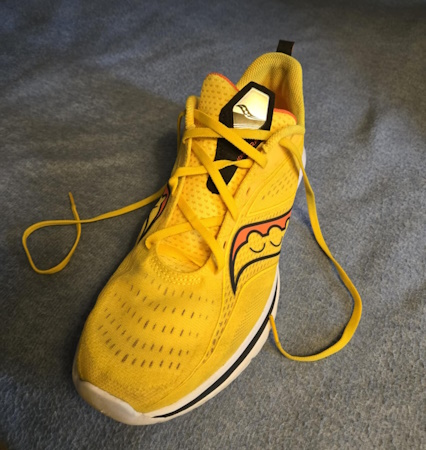
Another technique that is simple but can be effective. Lace your running shoe up like you normally would but skip eyelets as you go up. This will keep your shoe on the foot but allow it to feel less tight (hopefully comfortable) and give the foot more room.
“Running shoes from different brands are all very similar, but each will have a slightly different fit and feel, and even within a brand, each model will fit differently. You have to put them on the try them!” – Noel Paine
Combining Lacing Techniques
This is not one that needs photos, but you can use multiple lacing techniques on one shoe. You could use the lace lock for a secure feel at the heel, skip the first eyelets for a wide forefoot or bunion and use box lacing for a high instep or sore spot on the top of the foot. Use whatever works for each foot – and it may even be different for each foot.
“Always get the fit (length and width) of the shoe checked (when standing) and make sure you walk or jog in the shoe when you try it on.” – Noel Paine
Some running shoe brand websites will also have information on how to lace for a better fit:
Final Words and Advice
You should never have to fiddle or play around with the lacing or the shoe too much to make it fit or work. Unless you have a serious foot condition or an abnormal foot, you should probably try on another running shoe if the first one does not fit well.
Make sure the shoe feels comfortable for you. It should be comfortable and fit well when you first put it on. It should be snug, not tight, not rub anywhere (ankle, Achilles, etc.) and have enough room at the toe.


Leave a Reply