By Kieran Alger
The original super shoe is back. And like the first ground-breaking Nike Vaporfly, the Vaporfly 4 looks to cut its own path, offering something different to its predecessor – and the rival race shoes in its own stable like the Alphafly 3. On the surface, the changes look quite subtle but there’s a very important shift back to a race shoe that’s lower-stack (at least versus the current 40mm trend), more direct.
Perhaps a step back closer to the minimal origins of the Vaporfly. So will fans of the Vaporfly 3 like what’s new with the Vaporfly 4? Read on to find out in my Nike Vaporfly 4 vs Vaporfly 3 review.
If you click, or buy from, links on this page, we may receive compensation. Learn more

Stack Height, Drop, Weight and Price
The Nike Vaporfly 4 cuts 5mm from the heel and 3mm in the forefoot. So you’ve now got 35mm in the heel and 29mm in the forefoot for a 6mm drop, versus the Vaporfly 3 with 40mm in the heel and 32mm in the forefoot and an 8mm drop.
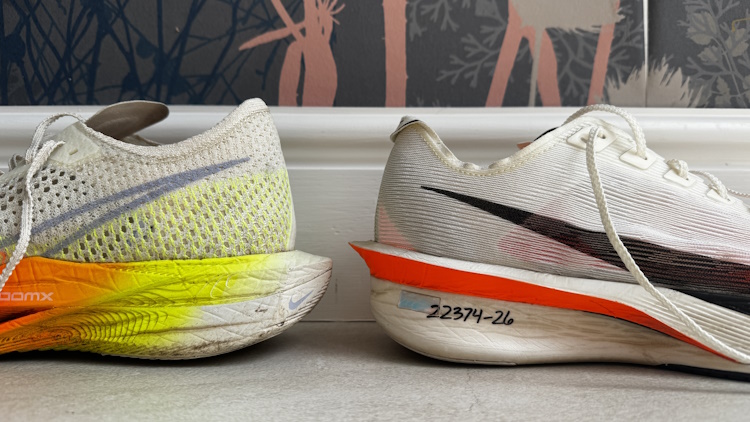
The Vaporfly 4 is a good bite lighter, too. In fact it’s the lightest model in Vaporfly history. The Vaporfly 4 now weighs in at 5.2oz or 148g in my US men’s size 9.5. That’s more than an ounce lighter than its predecessor which came in at 6.9 oz or 195g.
On price, you’re going to have to pay a little extra for the Vaporfly 4. It’s now $260 – so a $10 bump over the Vaporfly 3.
Stats
Nike | Vaporfly 3 | Vaporfly 4 |
|---|---|---|
Best for | Racing / speedwork | Racing / speedwork |
Support | Neutral | Neutral |
Cushion | Maximum cushioning | Medium cushioning |
Stack Height | 40mm heel | 35mm heel |
Drop | 8mm | 6mm |
Weight | 6.9 oz / 195g | 5.2oz / 148g |
Suggested Retail Price | $250 | $260 |
Fit | True to size | True to size |
Rating | 8.5/ 10 | 9/ 10 |
Design
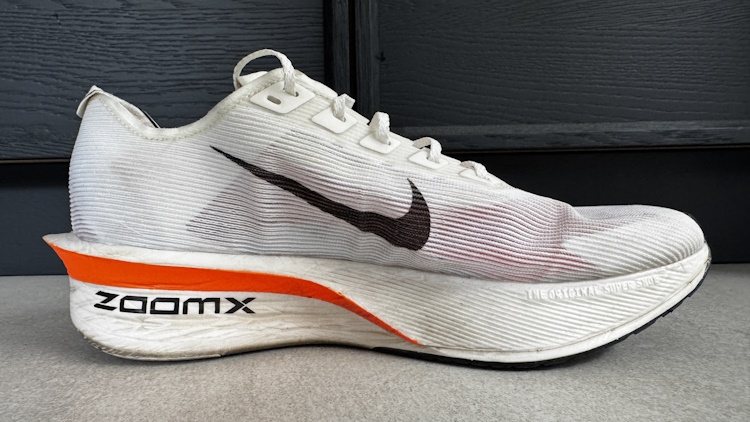
The Nike Vaporfly 4 sticks to the same, familiar super shoe combination as the Vaporfly 3 with a ZoomX midsole, a carbon Flyplate and light, breathable, racy uppers. It’s all still compact, lightweight and relatively minimal.
The biggest change comes in the midsole. While most supershoes and race shoes now max out the race-legal stack at the 40mm limit, Nike made the call to reduce the wedge of ZoomX foam underfoot. That helps bring those big weight savings but creates a different ride from the softer, spongier Vaporfly 3.

The FlyPlate carbon plate also now has a more aggressive curve to enhance that lever effect. The Vaporfly 4 is also now wider in the midfoot section. So if you found that narrowness in the Vaporfly 3 impacted your comfort or caused irritation, this extra width is designed to alleviate that.
When it comes to the uppers, Nike swapped the highly perforated Flyknit for a brand new light, engineered mesh upper that adds more wrap and support but feels less airy.

The heel collar package stays largely the same with small internal pads. There’s an added heel tab to help you get the shoes on and in place. The lacing is no longer offset but the flat-wrapping race tongues are very similar with a little padding to help avoid lace pinch.
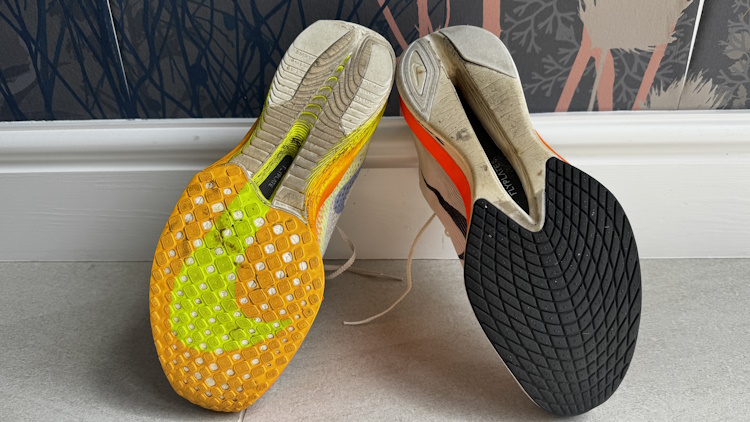
The outsole sports a good covering in the forefoot and two small pads on the heel impact zones. Nike has made more weight savings with a thinner outsole and there’s now a bigger central channel in the midsole. That’s there to save weight but can catch the odd stone.

Nike Vaporfly 3
Shop Now at
Nike Vaporfly 4
Shop Now at
Fit
In testing I ran in a US 9.5 in the Vaporfly 3 and the new Vaporfly 4. Which is my regular size in Nike shoes.
For the Vaporfly 4, I felt the fit was good overall with a good balance of hold and flex. The uppers wrap nicely but move and flex with your foot, so though the fit is race-hugging, they avoid feeling cramped like some carbon race shoes can. At times where I didn’t pay enough attention to lacing, I had a little heel slipping. That was fixed by lashing the laces down more precisely.
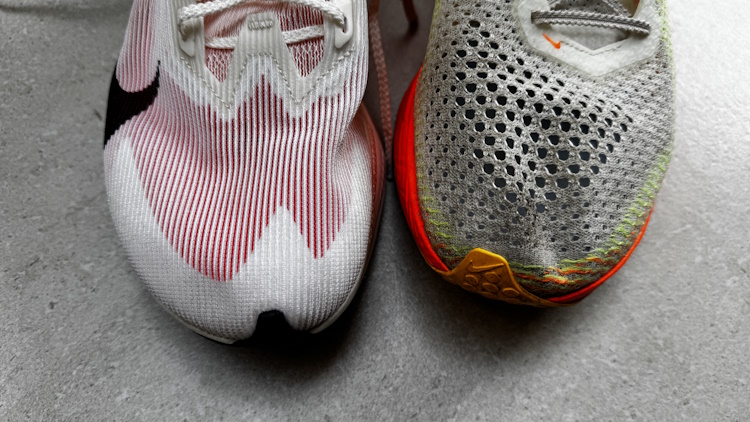
There’s a slightly more accommodating midfoot on the Vaporfly 4 that’s been widened from the Vaporfly 3. But the Vaporfly 4 feels more compact and snug on the foot.
For the Vaporfly 3, the fit was secure in the heel and across the midfoot with good hold, no pinching and no worrying movement on the big ZoomX platform. However, I did find they came up slightly long in the toe box. If you like an inch between your little piggies and the end of the toe box you’ll get that here.

That extra room wasn’t distracting on the move. It may even help reduce the risk of black toenail issues if you’re taking on 2-3 hour long runs or marathons.
But in both shoes I’d recommend going true to size.
Performance
In testing, I’ve covered close to 200 miles in the Vaporfly3 and that includes multiple marathon race tests (some that went well, some not so well). I’ve covered much less in the Vaporfly 4 – closer to 25 miles. But I did an all-out 10 miler where I set a new PB. And generally pushed the pace in both shoes. I’ve also run ragged miles on tired legs, testing across a range of paces, mainly on the road.
It’s been a while since I logged miles in the Vaporfly 3 so I also pulled them out of semi-retirement to test them again for this review, including a side-by-side mile with one Vaporfly generation on each foot.
The biggest change here is the flip from the much softer, squishier and more accommodating midsole setup on the Vaporfly 3 back towards a lower stack shoe that compresseses less (much less in the heel) and is a bit snappier, more connected and faster to return. If you felt the Vaporfly 3 had gone too mushy, the Vaporfly 4 returns some of the immediacy.
That might mean, for some runners, this lighter, lower stack, more minimal shoe is now more suited to the upper limit of a guns-blazing half marathon than the full 26.2. But for others, who really like the snappiness of the earliest-gen Vaporflys this will feel like a positive return. Though it’s not all the way back to the direct ride of those first-gen racers.
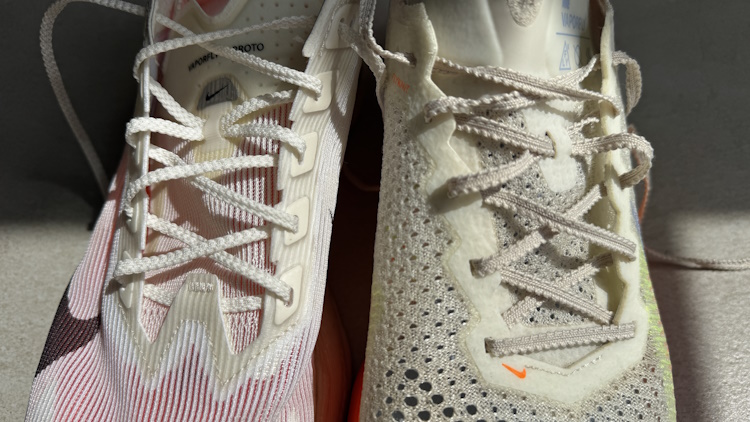
The Vaporfly 3 may have brought more forgiving softness that made it kinder to ragged form and tired legs. But I found it a bit too mushy. It lost some of its all-out edge and I preferred other stiffer shoes, like the ASICS Metaspeed Sky Paris for pushing for my fastest times. The Vaporfly 4’s lower stack and the tweaked plate offer a better balance. The shoe feels light and fast, you’ve got a good connection with the road underfoot but without being too harsh.
On durability, there’s not much to choose between the endurance of the outsole set up. I found the large perforations in the Vaporfly 3 had a tendency to stretch. They never broke but the more closed structure of the Vaprofly 4’s mesh looks longer lasting.
My Verdict
The updates to the Nike Vaporfly 4 may well divide opinion. But then on some level, so did the extra softness we got in the Nike Vaporfly 3. Some people loved it, some not so much. Others thought it took the Vaporfly too close to the Alphafly 3.
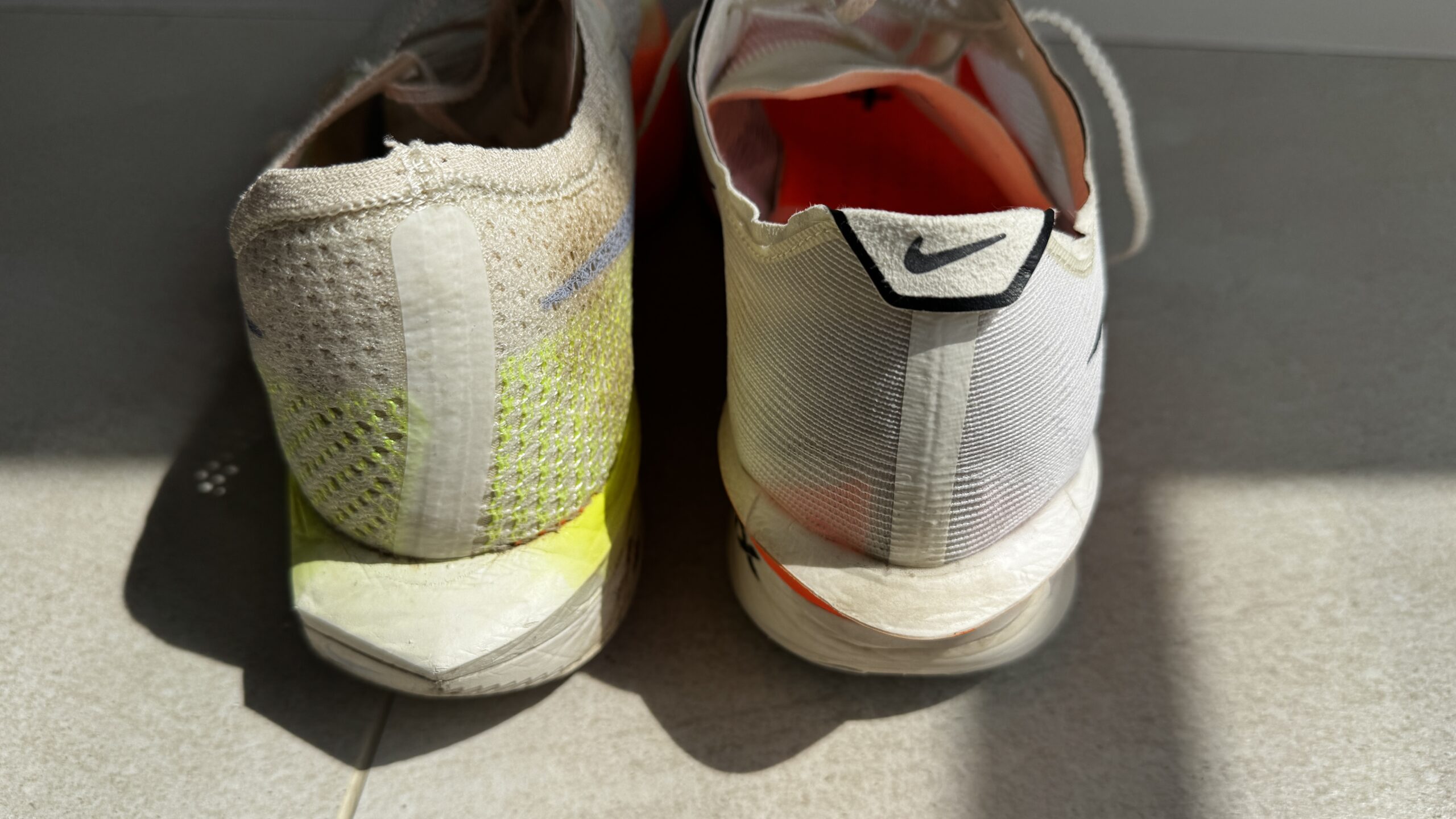
Which of these shoes works best for you will come down to whether you prefer a softer, squishier edge or you want a foam that compresses less and returns faster with a bit of a firmer bite. If it’s the former, the Vaporfly 3 is your shoe. If it’s the latter, the Vaporfly 4 is the way to go.
If I had to choose one shoe to race up to the half, it’d be the Nike Vaporfly 4. I’d even likely choose it for the marathon. But I don’t mind a more direct ride. There will undoubtedly be some runners who want more softness for the longer races and the Vaporfly 3 will be more accommodating. Though if you’re looking for a combination of more cushion and energy, the Alphafly Next% 3 is definitely a better long-haul or marathon option.
If you like the softness and you can find the Vaporfly 3 on a deal, snap it up. If you want a shoe that’s got more pop, the Vaporfly 4 is the way to go.


Leave a Reply