By Paul Freary
The most established models from ASICS and Brooks are the Nimbus and Glycerin, respectively. Both are the brand’s neutral, cushioned, range-topping daily trainer options.
So, which is best - Nimbus 28 or Glycerin 23?
If you click, or buy from, links on this page, we may receive compensation. Learn more
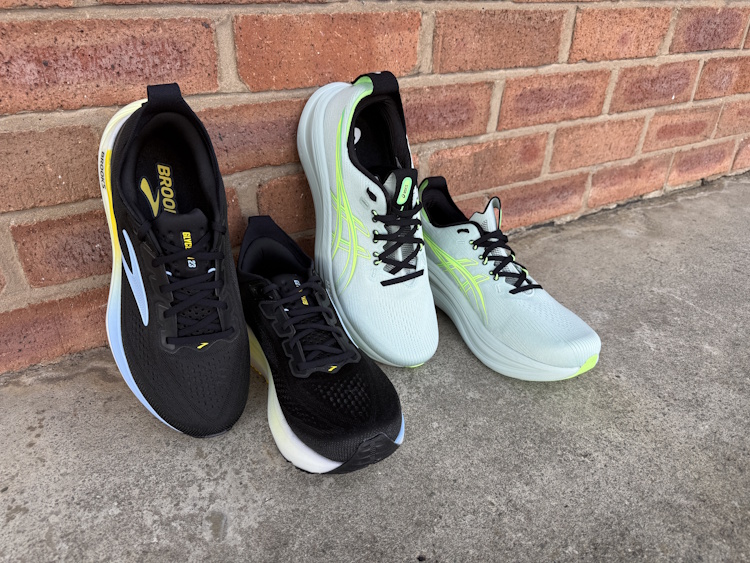
Glycerin 23 and Nimbus 28
While super-trainers are now becoming a popular running shoe category in their own right, the traditional daily-trainer still plays an important role in every runner’s daily rotation of running shoes. In fact, if you are going to choose just one pair of shoes to run in, a well-cushioned daily trainer should be that shoe.
Stats
Running Shoes | Nimbus 28 | Glycerin 23 |
|---|---|---|
Best for | Max-cushioned, neutral daily trainer | Cushioned, durable neutral daily trainer |
Support | Neutral | Neutral |
Cushion | Max stack cushioning | Moderate cushioning |
Stack Height | 43.5mm heel | 38mm heel |
Drop | 10mm | 8mm |
Weight | Men 281g (9.9oz) Women 242g (8,5oz) | Men 300g (10.6oz) Women 272g (9.6oz) |
Suggested Retail Price | $170 | $165 |
Fit | True to size | True to size |
Rating | 9/ 10 | 9.5/ 10 |
Design
The Nimbus 28 is now a max-stack cushioned shoe that goes beyond the ‘usual’ 40mm stack height. At 43.5mm in the heel and 33,5mm in the forefoot with a 8mm heel-to-toe drop, it offers one of the highest stacks of cushioning on the market.
The foam itself is the brand’s FF Blast Plus.
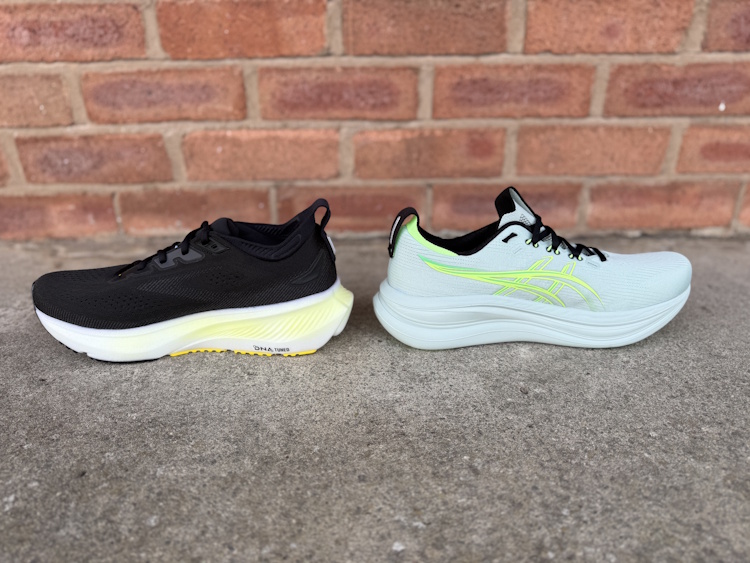
Glycerin 23 and Nimbus 28 - Midsoles
Fast becoming the brand’s go-to cushioning material for training shoes, FF Blast Plus is soft and welcoming on step in and copes well with the demands of day-to-day running.
The Glycerin 23 uses Brooks’ DNA Tuned midsole foam. DNA TUNED is a nitrogen-infused foam that combines larger cells in the heel to create a soft, plush landing and smaller cells in the forefoot for a responsive, more energized take off.
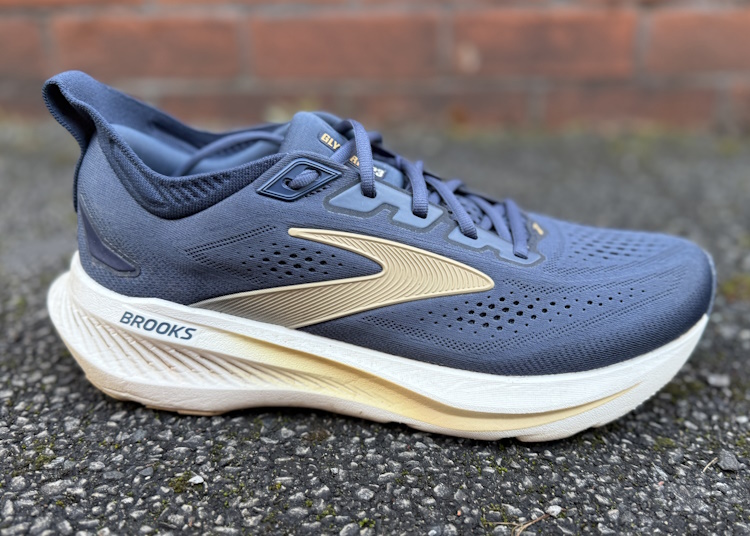
Glycerin 23
Shop Now at

Nimbus 28
Shop Now at
Fit
Both the Nimbus 28 and Glycerin 23 fit true to size in both length and width compared to other shoes from the respective brands and to each other. I wear the same size in both models.
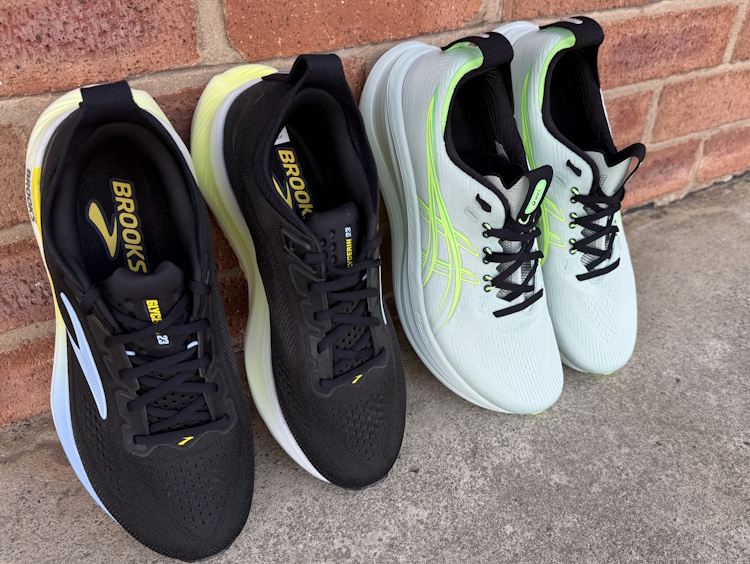
Glycerin 23 and Nimbus 28 - Uppers
Being the range-topping models, as you would expect, the quality of the upper construction is great. The Glycerin 23 uses a triple-jacquard knit upper, which adds a lightly padded feel to the shoe and gives a super-plush hold around the foot.
The Nimbus 28 has an engineered mesh upper, which also fits every bit as well, but perhaps does not have the same detail as the Brooks.
Performance
The ride of the Nimbus is essentially smooth and relatively effortless. It is a big shoe under the foot thanks to that deep midsole stack, but it remains relatively light when on the move and rides rather unnoticed.
There is a fluid flow from heel to toe, and the gentle rocker helps that large stack achieves this. The shoe also feels pretty stable for a highly cushioned neutral model.
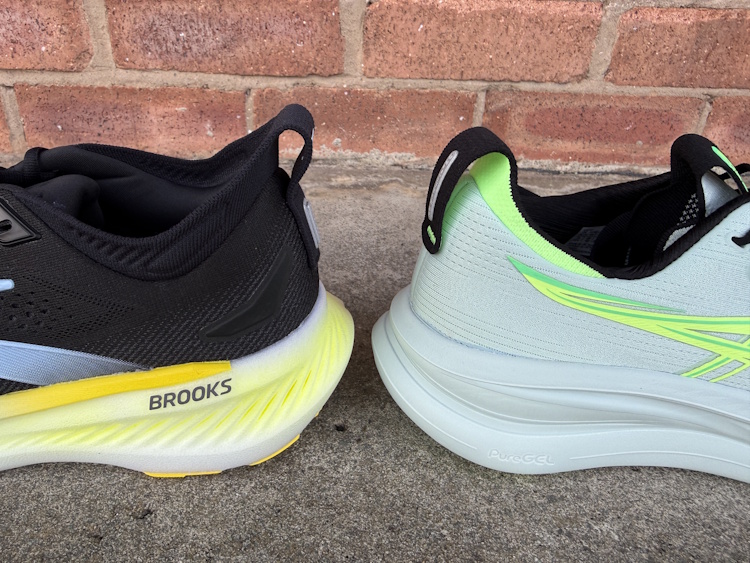
Glycerin 23 and Nimbus 28 - Heel Stack
The cushioning is best described as soft, but as runs progress, there is a slight lack of responsiveness, particularly on runs of around ten miles in distance. Particularly when I began to tire, I felt I had to work a little harder, searching for a little ‘spring’ from the shoe.
With that in mind, I have kept the Nimbus for easier recovery runs, rather than anything at tempo pace. It’s a shoe firmly focused on comfort over speed.
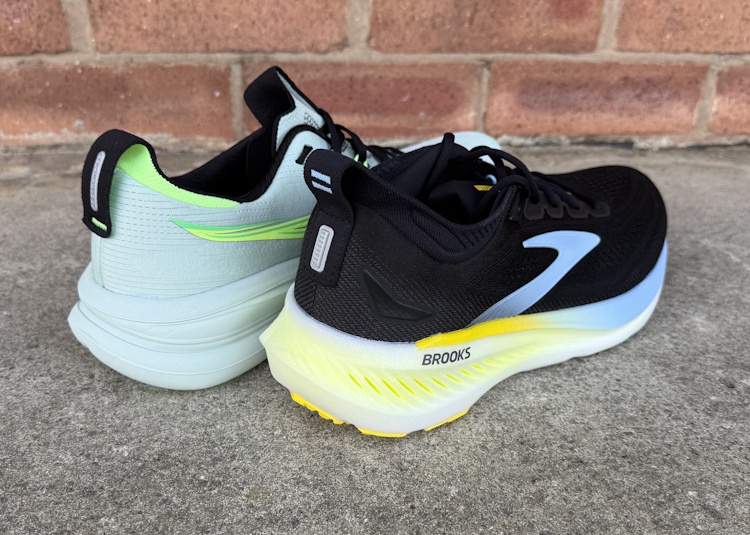
Nimbus 28 vs Glycerin 23 - Heel
The Glycerin is a shoe aimed squarely at the same customer as the Nimbus, and although its stack height is 5mm less under the foot, it feels perfectly adequate and every bit as much of a max-stack shoe as the ASICS.
Initially, the Glycerin feels a little firmer when you step into it, but at the same time, a little more stable. Yes, they are both neutral models, and yes, they have support type relations in the Glycerin GTS and Kayano, but it is perhaps a combination of the slightly firmer feel and lower stack that gives the Glycerin the advantage in the stability stakes.
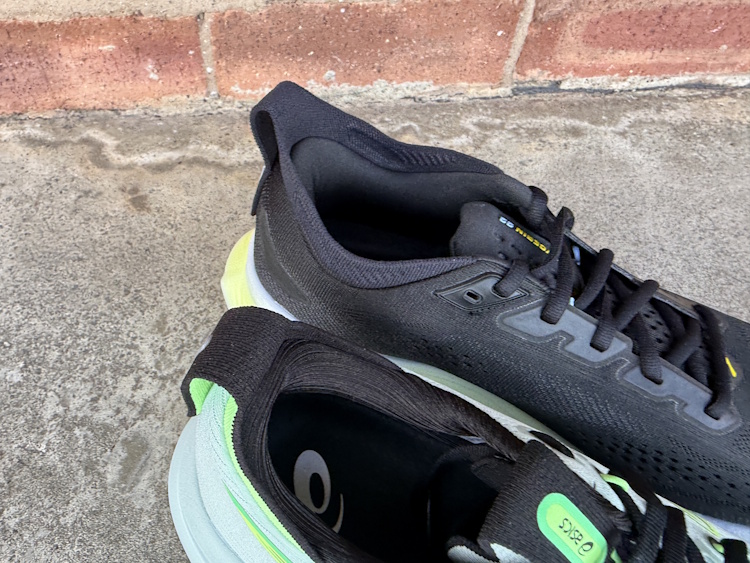
Nimbus 28 vs Glycerin 23 - Heel Collar
Once running, the Glycerin feels like it softens a little. The nitrogen-infused midsole soaks up the impact well, and in the forefoot, there’s certainly a more responsive feel.
On those longer runs, the Glycerins’ forefoot responsiveness is more obvious than the Nimbus and, at least for me, wins that contest.
My Verdict
Both shoes offer excellent cushioning properties and are great for daily training for neutral runners.
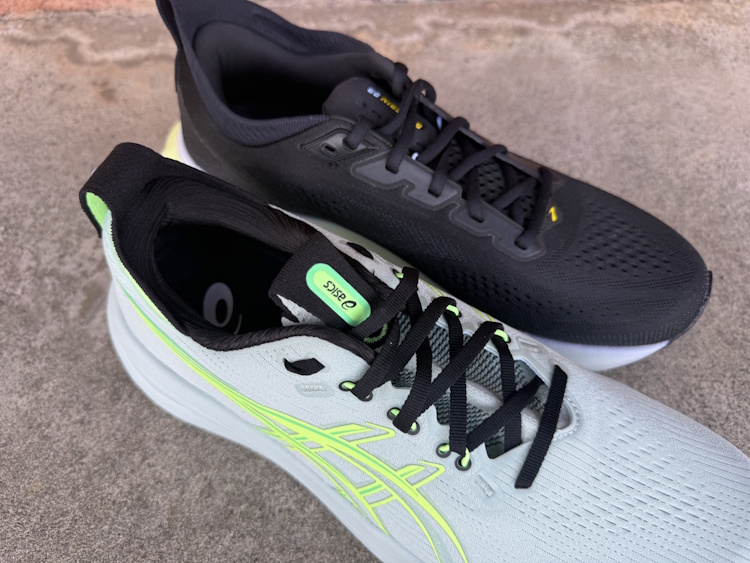
Glycerin 23 and Nimbus 28 - Lacing
As always, the choice between the two will come down to personal preference with regards the underfoot feel of each model.
The Nimbus offers a slightly higher stack height. The Nimbus is also a little lighter.
The extra weight in the Glycerin comes from the denser midsole foam, but the upside of that is perhaps its durability, where I think the shoe retains more of its cushioning for longer.
The stability of both shoes is very similar, with the Glycerin perhaps proving to be a little better, again due to the slightly lower and firmer rearfoot feel.
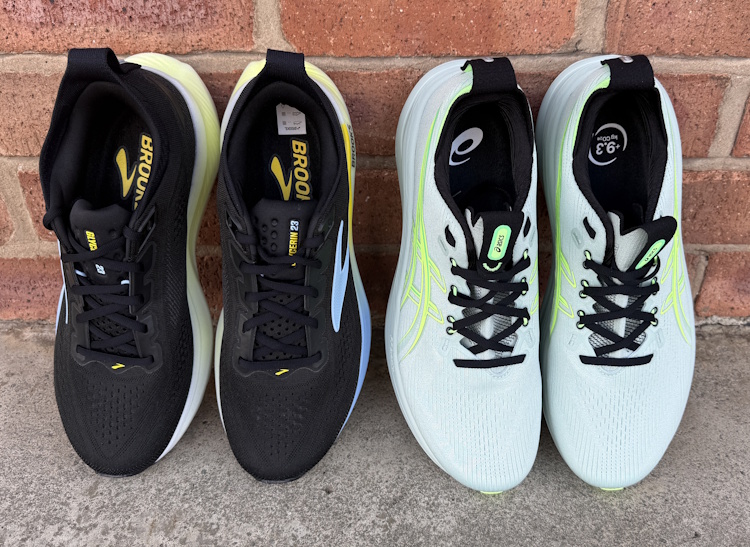
Glycerin 23 and Nimbus 28 - Toe Box
The upper fit and feel of both models are very similar, and both are very well-constructed shoes using great materials.
The two main differences for me are the responsiveness and durability of the shoes. On shorter runs of say, less than one hour, the shoes feel very similar. Both score well in terms of general cushioning.
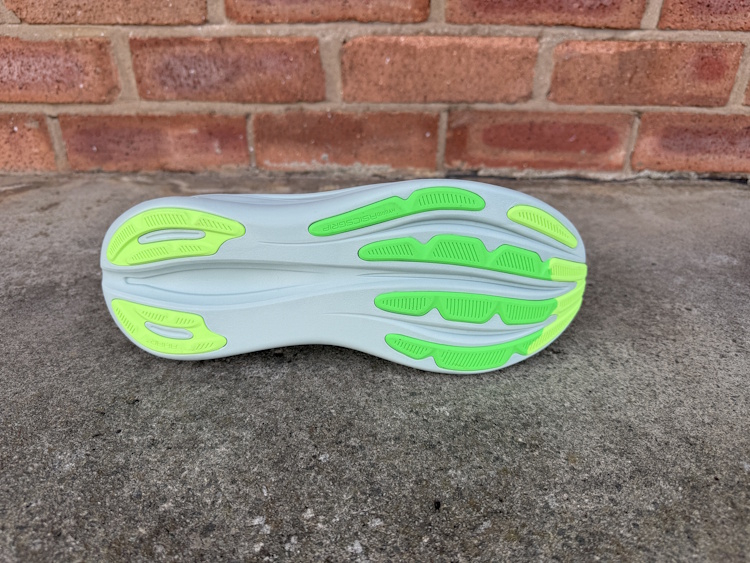
Nimbus 28 - Outsole
I do notice that on runs of long than an hour, perhaps as I tire a little, the Nimbus begins to feel a little less responsive in the forefoot and feels as though I am having to work harder to get any ‘spring’ from the toe-off. Here, the Glycerin provides a little more feedback and feels less ‘sinky’ and responds better.
With regard to long-term durability, the nitrogen-infused foam midsole of the Glycerin models feels like the most durable on the market right now. The rate of compression is low over several hundred miles, and it simply feels closer to new for longer.
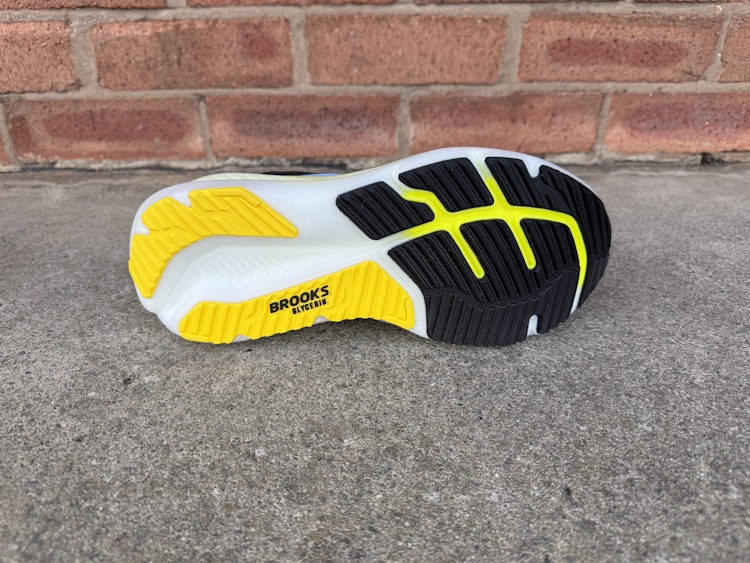
Glycerin 23 - Outsole
So, both are great models, and regardless of which you pick, you’ll be fine, but this should be expected of range-topping models regardless. The fine detail will come down to personal preference.


Leave a Reply