By Paul Freary
The Brooks Beast GTS 26 and Adrenaline GTS 25 are both stability-type running shoes from the brand. Both models are very established in their respective categories, and both have a strong following of loyal users who come back to the shoes with each update.
But which is best for you and which should you choose?
If you click, or buy from, links on this page, we may receive compensation. Learn more
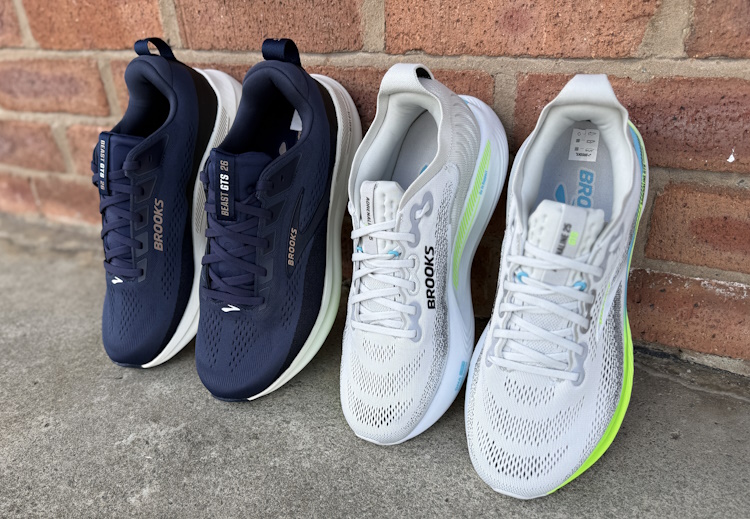
Stats
Brooks | Beast | Adrenaline |
|---|---|---|
Best for | Heavier runners with flat feet or those requiring a comfortable shoe for everyday use | Runners wanting an everyday model that offers a good combination of cushioning and mild control |
Support | Maximum level support | Mild Stability Shoe |
Cushion | Mid/High-stack cushioned | High stack cushioning with support |
Stack Height | 38mm heel | 36mm heel |
Drop | 12mm | 10mm |
Weight | Men’s 354g / 12.5oz | Men 300g (10.6oz) |
Suggested Retail Price | $170 | $155 |
Fit | True to size | True to size |
Rating | 9/ 10 | 9/ 10 |
Design
Both models use the same basic cushioning material, DNA Loft V3, a nitrogen-injected foam midsole.
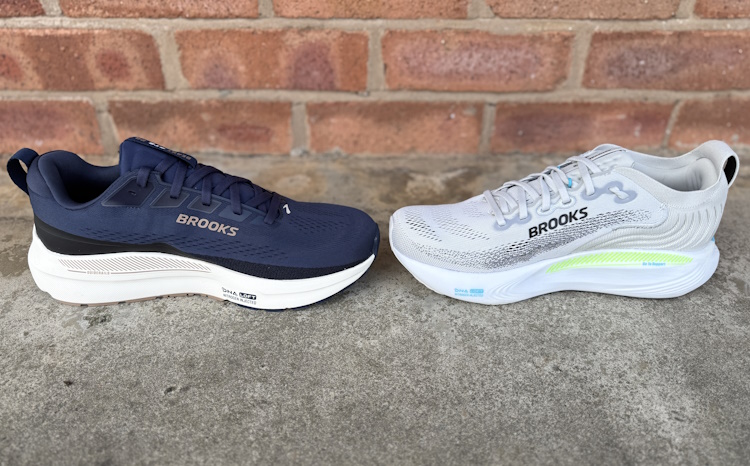
Although the material is the same, it feels distinctly different in both shoes. The durometer, or firmness of the cushioning, varies, and in the Adrenaline GTS 25, it is much softer.
Although the Beast GTS 26 has a higher stack of cushioning, 38mm compared to 36mm in the Adrenaline, it feels much firmer.
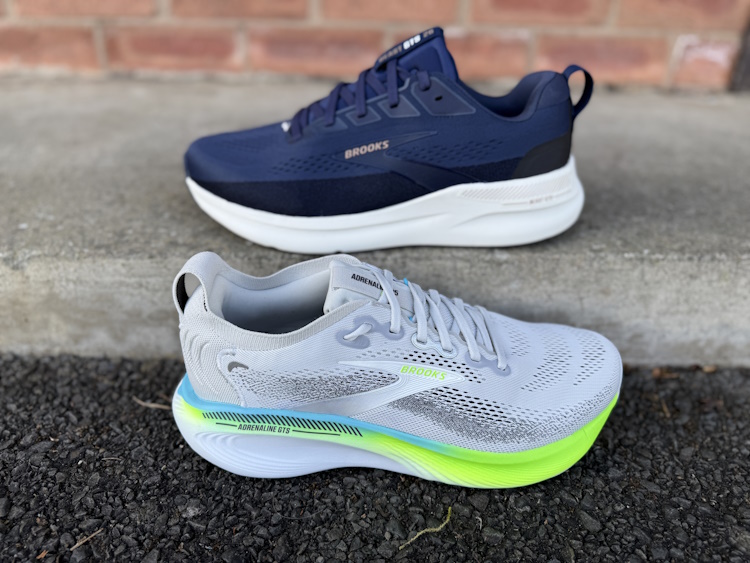
DNA Loft V3 is a nitrogen-injected foam material and is now favoured by many leading brands thanks to its more responsive nature compared to CM-EVA. It is also lighter and more durable. Since its introduction a few years ago, I have found nitrogen-injected midsoles to retain their cushioning for many more miles than traditional midsoles.
Although I do try lots of shoes throughout the course of each year, it’s the nitrogen-injected models that I find difficult to discard, as they simply don’t feel ready to be replaced!
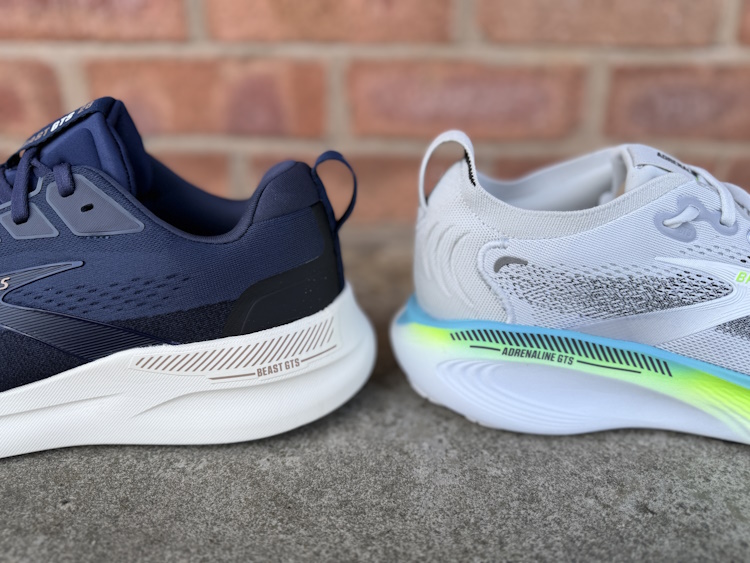
GTS – GuideRail Technology System. This is the method of control favoured by Brooks, and rather than being a medial post to control pronation, the GuideRails are extensions of the midsole cushioning material that extend a little higher around the rear of the shoe on both the medial and lateral sides. These then ‘seat’ the foot within the shoe and provide control both medially and laterally.
In the Adrenaline, we have the familiar GuideRails, which offer a mild to moderate level of control.
In the Beast, we have longer GuideRails which extend further around the rear of the shoe and into the midfoot to provide more control and stability.
The Beast also has a straighter last to help reduce overpronation as well as a firmer heel counter and external rubberised overlays, which all work together to create a very sturdy rearfoot fit to the shoe.
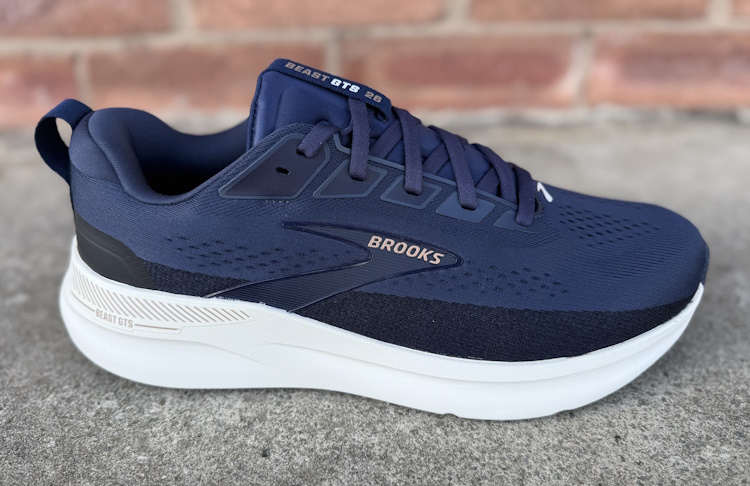
Beast GTS 26
Shop Now at
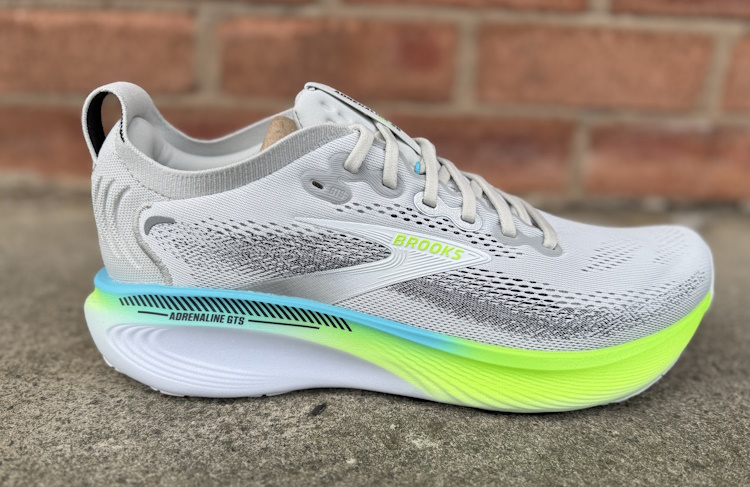
Adrenaline GTS 25
Shop Now at
Fit
Both the Beast and Adrenaline fit true to size in terms of length and width.
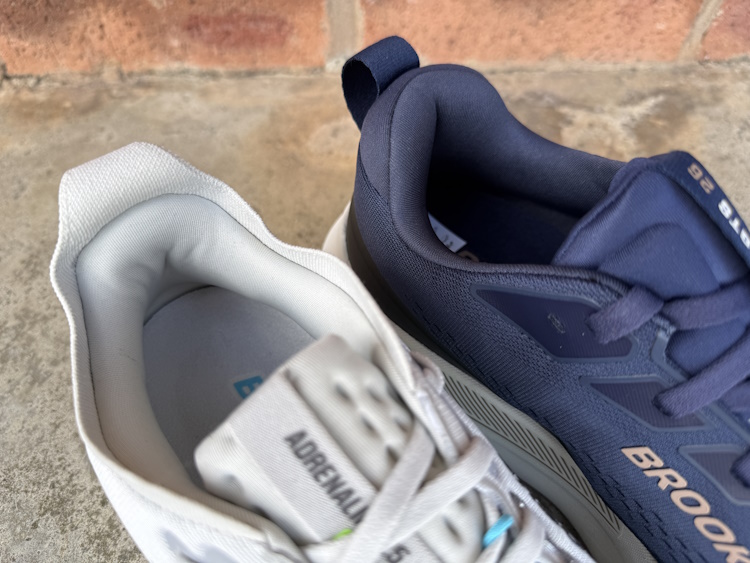
The Beast has a thicker sockliner, which, if removed, creates more volume within the shoe to accommodate orthotics.
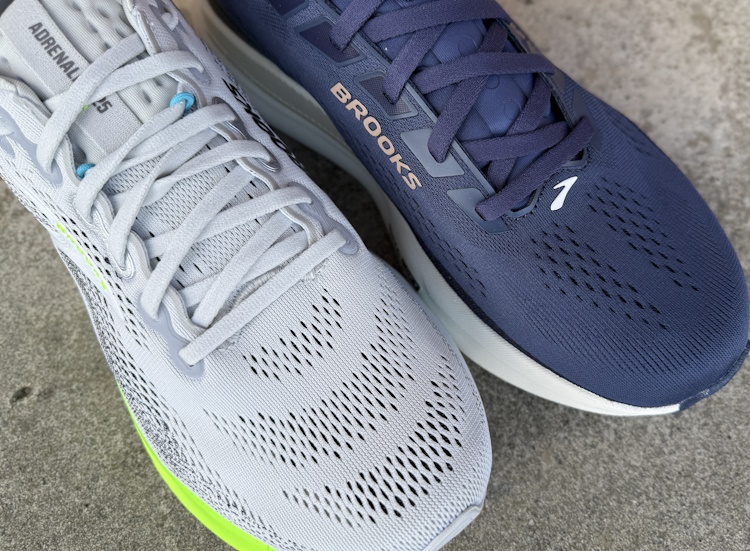
Both shoes feature the usual high-quality construction that we have come to expect from Brooks, utilising neat, engineered mesh uppers and comfortable padding in the tongue, heel collar, and Achilles areas.
Performance
The ride of the Adrenline is familiar to regular wearers of the model, only here it uses a touch more of the nitrogen-infused foam in the forefoot compared to previous versions, giving it a slightly softer feel.
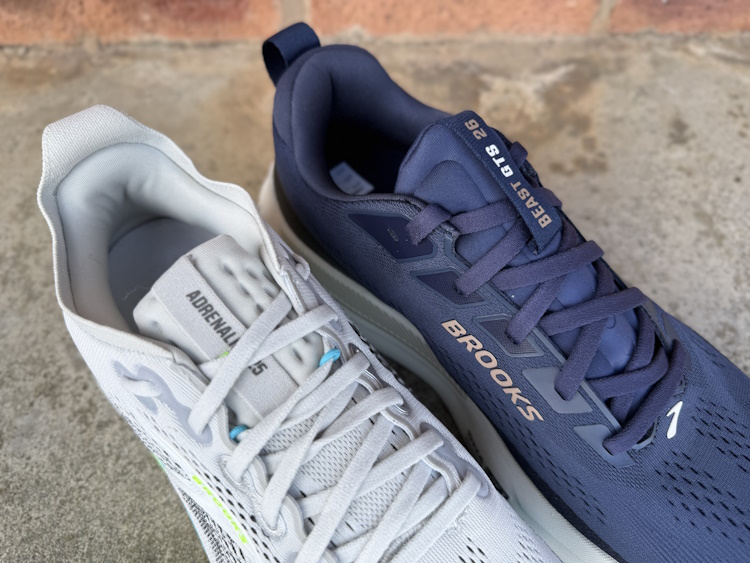
Although the Beast uses the same DNA Loft v3 midsole, it does feel a little firmer. Perhaps this is due to the Beast being a little higher stacked or maybe just the geometry of it, which is a little straighter and flatter, with less forefoot rocker. These are features which enhance the stability of the Beast, but at the same time make it feel a little firmer.
The Beast certainly offers more stability, the Adrenaline more flexibility.
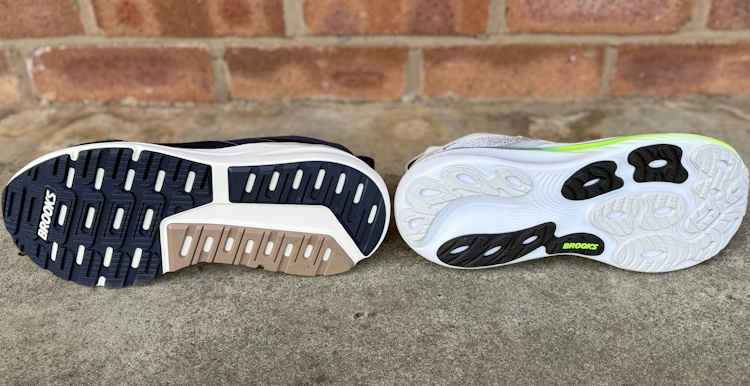
The Beast CAN be too much shoe for some people. I often only recommend it to those with larger feet! I find someone with size 12 feet can make the shoe function better than, say, someone with size 6 feet!
My Verdict
While both shoes are broadly suited for similar users and foot types, the best-case scenario for each is very different.
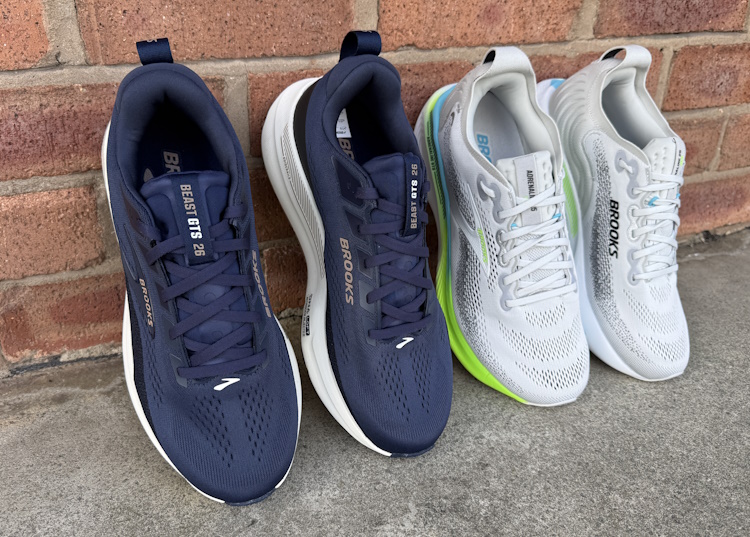
The Beast GTS is now better suited for casual and everyday use for heavier runners/users. While it is still capable as a running model, there are lighter shoes available that, although not offering quite as much control as the Beast, provide a good balance of weight and control.
The Beast holds on to many of its original characteristics, which made it the popular model that it is today. It’s a big, sturdy, supportive shoe and as such is better suited to larger or heavier runners. The Beast isn’t the most flexible shoe around, and that somewhat necessitates the need for a bigger foot to get the best from it.
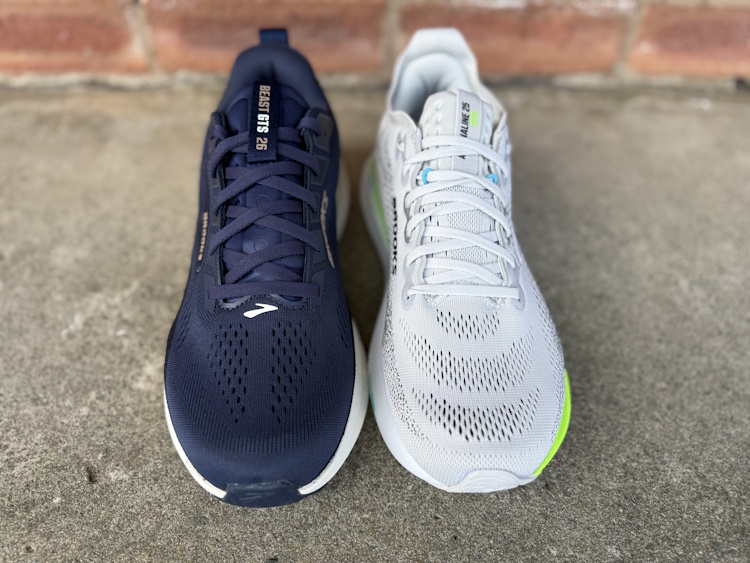
If you need the most supportive shoe on the market, the Brooks Beast GTS 26 is the one to go for and the best version of the Beast to date.
For a versatile, supportive shoe, the Adrenaline GTS 25 is a great option. It offers good cushioning, general all-around support and is available in a wide range of colours, making it a good ‘work’ or office shoe option if needed.
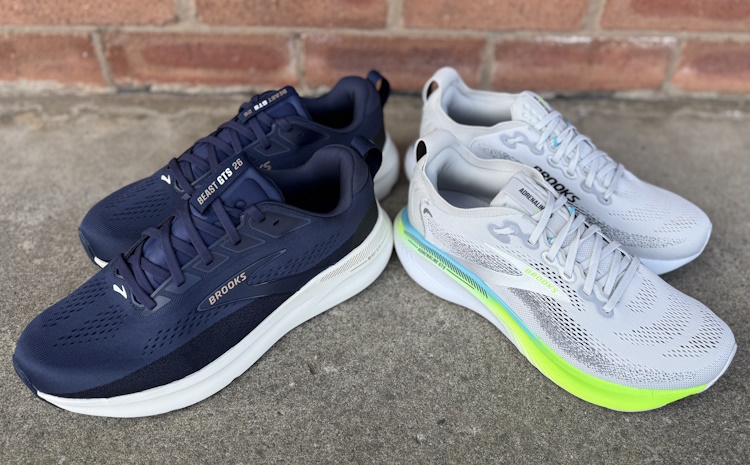
For a versatile, supportive shoe, the Adrenaline GTS 25 is a great option. It offers good cushioning, general all-around support and is available in a wide range of colours, making it a good ‘work’ or office shoe option if needed.
Summary
Both shoes are great options in their respective use categories.
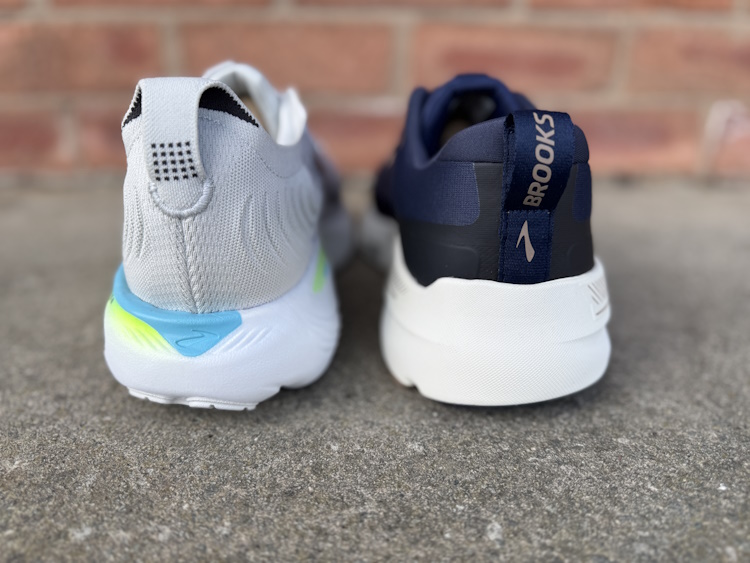
Larger, heavier runners with flatter feet, requiring support, find the Beast to be supportive and controlling.
The Adrenaline is one of the most versatile stability running shoe on the market today.


Leave a Reply