By Noel Paine
Many runners are now asking an important question.....
How Long Do Running Shoes Actually Last?
The answer is more complicated than the old “replace your shoes every 500 miles” (800km) advice that has circulated for decades and that I used to give out when I worked at a specialty running shop when I was in university. It has become more complicated.
Some shoes remain comfortable well beyond 1,000 kilometers, while others begin to lose their performance feel surprisingly early.
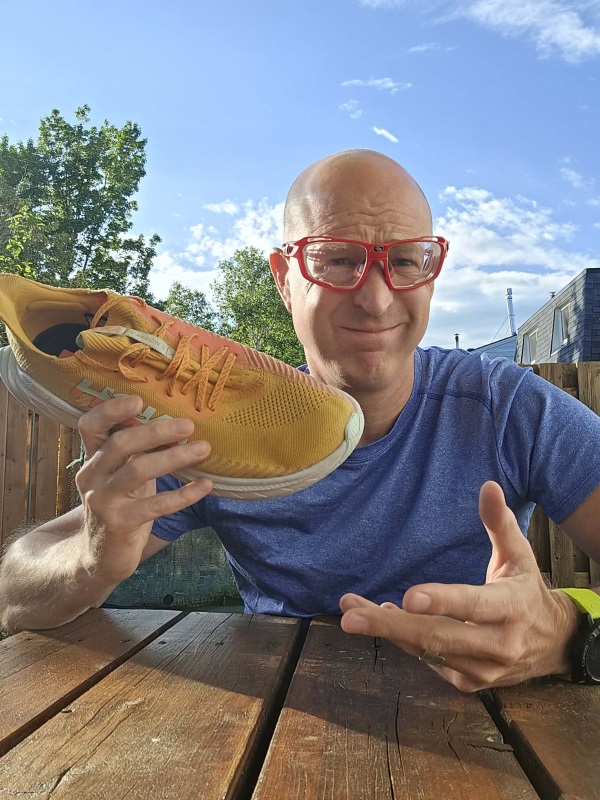
The author with one of his favorite shoes, the HOKA Carbon X, now replaced with models like the HOKA Cielo
Carbon-plated racing shoes may still look visually fine while their energetic “pop” has largely disappeared. Thick foams can feel soft for a long time even after their structure and responsiveness begin to fade. When I was a young runner and a blossoming shoe geek, it was mainly soft (EVA) and firmer foam (Polyurethane or PU) plus whatever the shoe company added (air, gel etc.) into the midsole; times have changed.
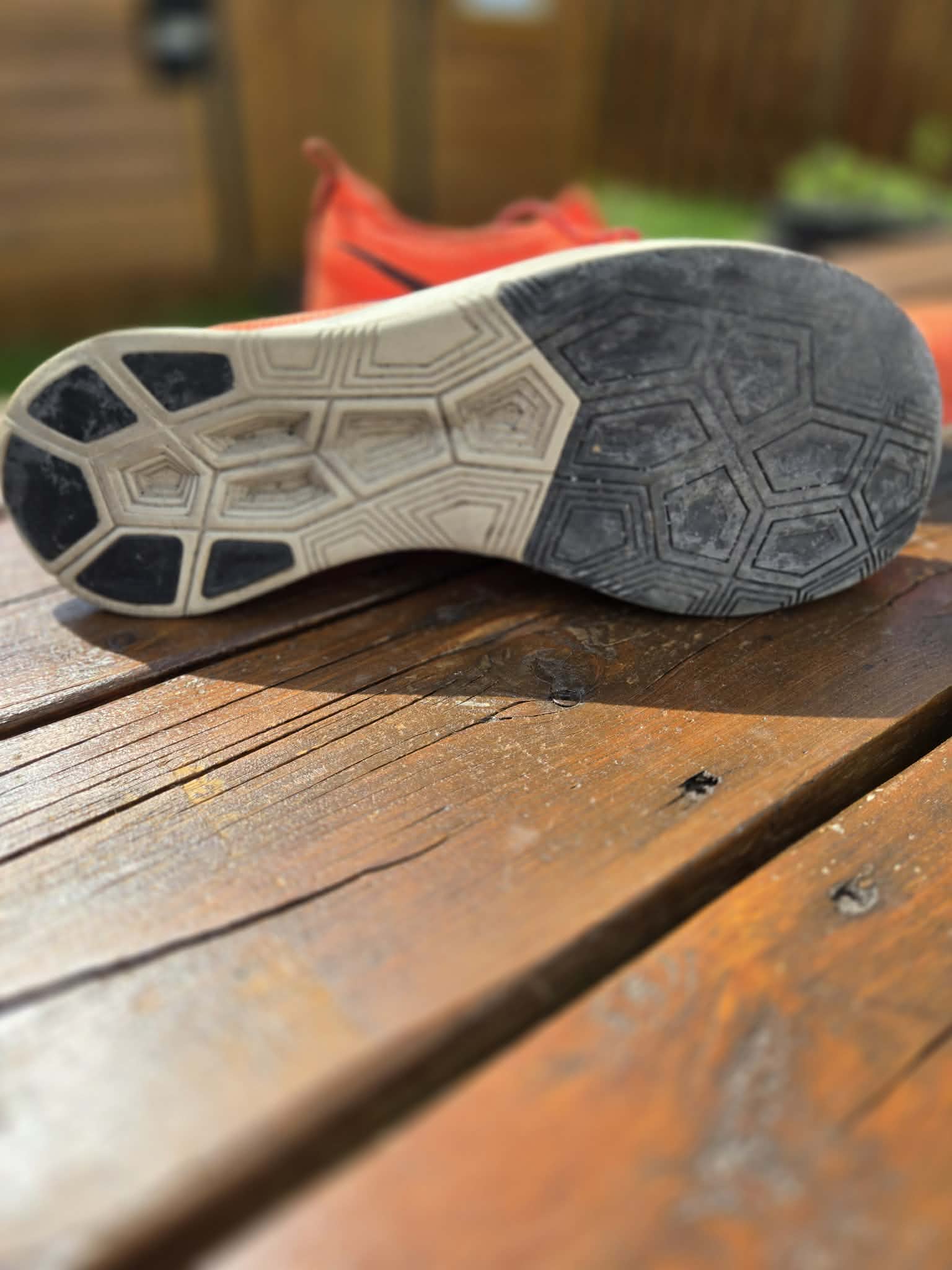
Wasted Outsole
The reality is that shoes rarely fail all at once. Different parts of the shoe wear out at different rates.
A shoe’s outsole may still look acceptable while the midsole foam has compressed. The upper may remain intact while stability has deteriorated. A super shoe may still function for training but no longer perform optimally for racing.
One of my favorite training shoes right now is the Asics Hyperspeed. It lightweight, well-cushioned and I like the feel of them. It’s a decent price.
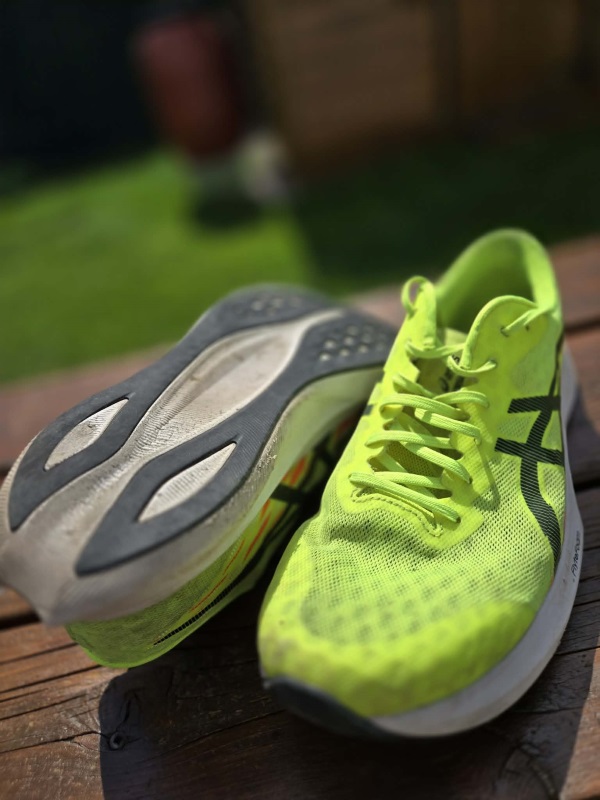
ASICS HyperSpeed
The downside can be that its softer foam feels great, but one day and it seems to bottom out. The bounce is gone. The upper usually looks okay and there isn’t excessive wear on the outsole. For me that means the shoe gets relegated to just casual walking and kicking around shoes and I get a new pair of training shoes.
So, lets talk about how that can happen.
This article takes a deep dive into -:
We also include original photographs of worn shoes, outsoles and foam breakdown, along with a companion video examining real-world examples.
The Old “500 Mile Rule” is Too Simple
For years, runners were told shoes last roughly:
That guideline still has value, but modern footwear has changed dramatically. Times have changed since I was a very young runner and shoes were simple compared to the technological wonders we see now on the roads. In the 1980s and 1990s when I was starting to run, most companies were really just trying to find new substances to add to the midsole to generate more cushion or a better ride.
Fast running shoes (racing flats) were stripped down to as little shoe as possible for weight, with just enough cushion t o survive a race. Things evolved but by the 2000s shoes were still not that different.
A traditional EVA foam trainer from 2005 behaves very differently from a modern PEBA-based (foam used in such shoes as Saucony running shoes) super shoe or a nitrogen-infused supercritical foam trainer.
My dusty pair of the original Nike super shoe (Zoom Vaporfly) (now replaced many times and now the Nike Alphafly 3) are examples of shoes that are meant for racing, and will definitely not get you 500 miles worth of training, or racing!
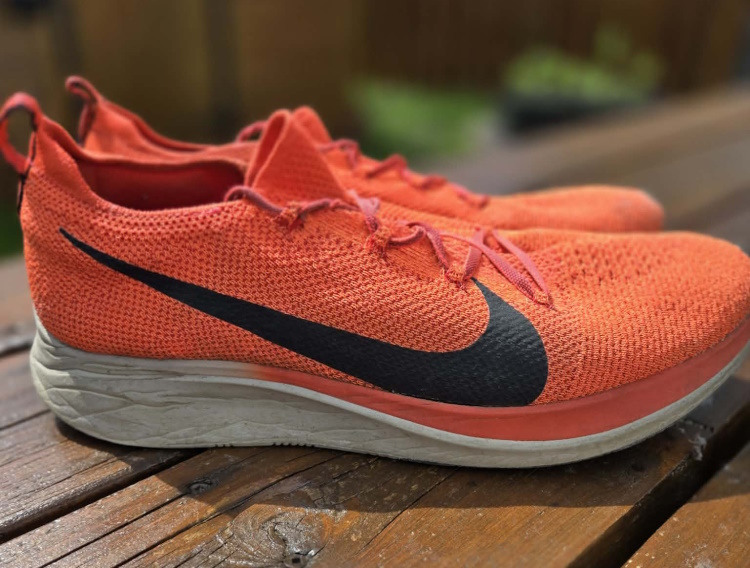
Nike Zoom Vaporfly
Research has shown that midsoles gradually lose cushioning and mechanical resilience through repeated loading cycles. Every foot strike compresses the foam. Over time, the material loses some ability to rebound to its original shape and performance.
But mileage alone does not determine lifespan.
A shoe’s durability depends on:
A lightweight runner on soft trails may get dramatically more life from a shoe than a heavier runner doing high-volume road training.
What Actually Wears Out in a Running Shoe?
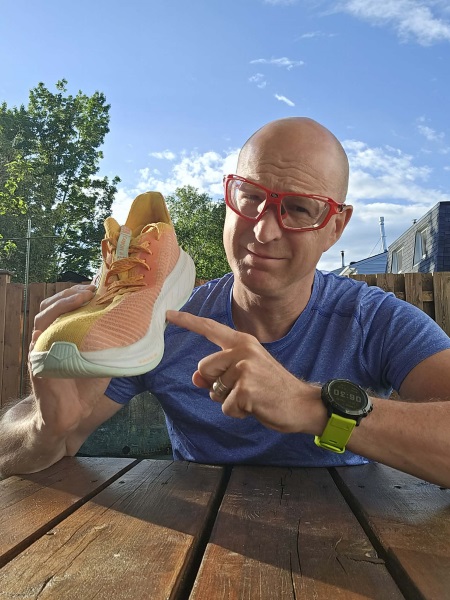
Noel Pointing at the shoe midsole foam
1. Midsole Foam Fatigue
The midsole is usually the first major component to degrade.
This is the foam layer responsible for:
Repeated compression causes:
Importantly, foam degradation is often invisible.
A shoe may look fine externally while feeling “dead” underfoot.
Researchers studying EVA foams found repeated impacts reduce cushioning efficiency and resilience over time. More recent foams improve energy return, but many may also be more sensitive to mechanical breakdown under high mileage.
Here are a few popular shoe company websites where you can read about what they use to cushion their shoes.
Some shoe brands are better than others about explaining about their cushioning materials. Do your research if you are going to pay $100-$300!
2. Outsole Wear
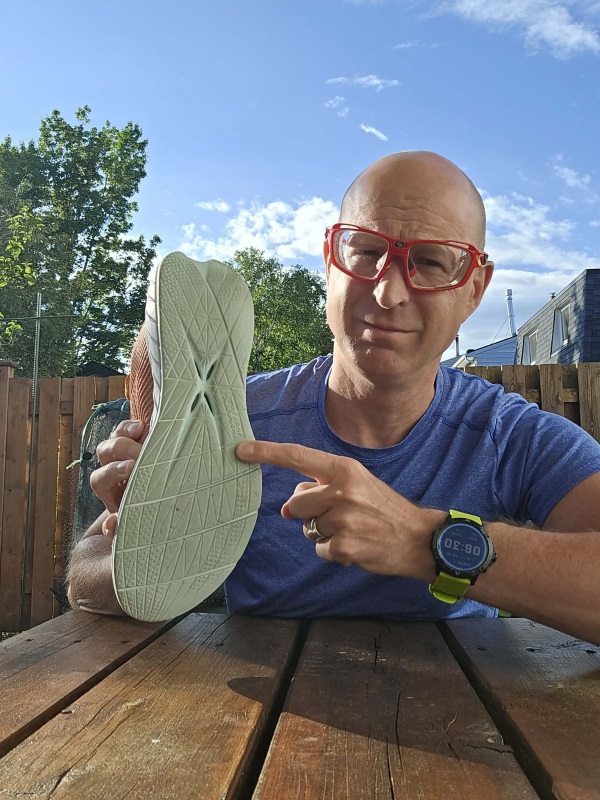
Noel Pointing at the shoe outsole
The outsole is the rubber contacting the ground.
Visible outsole wear is one of the easiest ways to assess a shoe, but it does not tell the whole story.
Some lightweight shoes intentionally use minimal rubber to reduce weight. Those shoes may show visible wear early even if the foam remains functional.
Conversely, heavily rubberized shoes may look excellent underneath while the foam has already lost substantial performance.
My HOKA Carbon X shoes that have now been replaced, had a soft blown runner outsole that tended to wear quite quickly, but I found the midsole and the carbon plate gave the shoe more life even is the outsole was wearing.
Blown rubber (or injected/injection blown rubber) is a rubber compound infused with air or gas. It is lighter, softer, and more flexible than solid rubber. It is often used when weight matters or on low impact areas of the outsole.
Carbon rubber outsoles blend natural rubber with carbon. This creates an extremely durable, high-traction outsole on running shoes. The outsole is often black because of the carbon.
Even comparing shoes like the speedy Asics Superblast 3 and another from the Asics line, the regular training shoe, the Asics GT-1000 15 and you can see a difference. The dark outsole rubber (AHARPLUS™ outsole rubber) of the trainer will be more durable.
One of my other go-to running shoes (and racewalking) is the super light and flexible Saucony Kinvara. The shoe is a slight as some racing shoes, but is a lightweight training shoe.
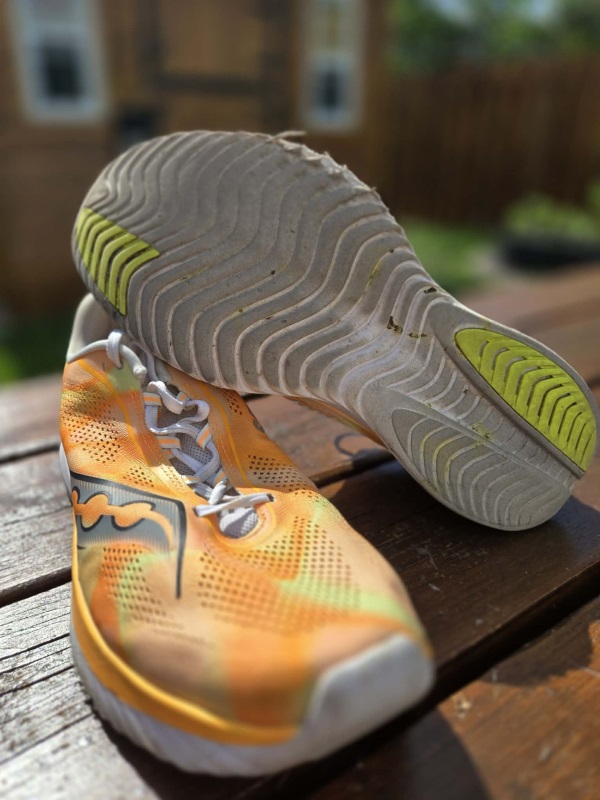
Saucony Kinvara - Worn out Outsole
The shoe has no real outsole and is just a midsole with a couple spots where they added some outsole material where you get the most wear. Great shoe but it can wear down fast and you wear away the actual midsole. Any wear patterns show up nicely!
Key outsole warning signs :
Wear patterns can also reveal biomechanics:
These patterns may reflect stride mechanics, fatigue, or stability needs. If you have questions, do your research and then go to a good specialty running shoe to see if they can help. Podiatrists and pedorthists are next for advice.
3. Upper Breakdown
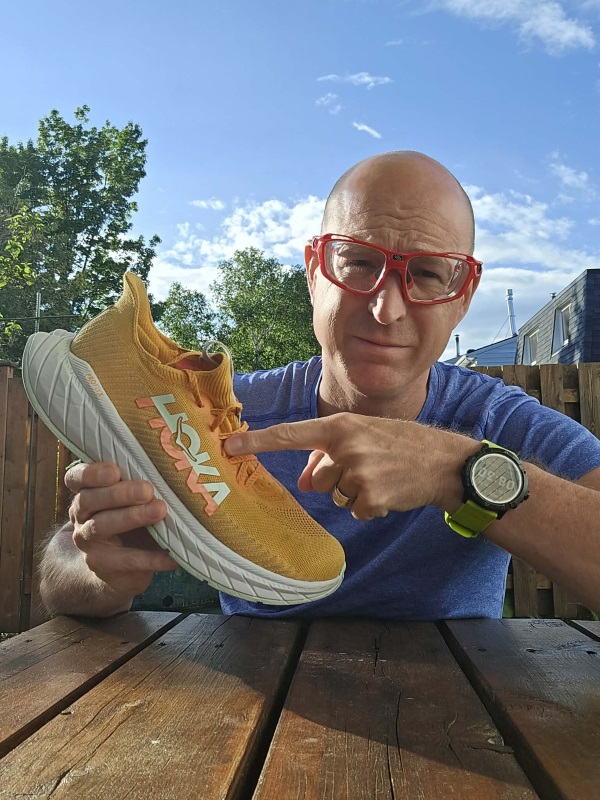
Noel Pointing at the Shoe Upper
The upper often lasts longer than the foam, but not always.
Signs include:
In highly cushioned shoe, upper instability can contribute to movement inside the shoe and reduced control. Lightly wash your shoes with soap and water to keep them clean, smelling better and to keep salt stains in the winter.
If you foot busts out of the side of the upper, your shoe might not be wide enough. If your big toe digs a hole in the front of the shoe, may not be the shoe’s fault. Look for a shoe that sometimes put extra material in that spot.
If the upper of your shoe is really beat up and you are not running through trails, it might be time to invest in a new pair. Its usually not the first thing to wear down, but some people weigh more, run on tough terrain and are harder on their shoes, think about who you are.
Do Carbon “Super Shoes” Wear Out Faster?
This used to be the lightest shoe in the world. The Reebok Floatride RunFast Pro 2 was what fast racing shoes used to look like in 2020. The shoe weighed in at 100 grams (3.5 ounces). But this was one of the last minimalist approaches to race shoes, you don’t see many shoes like this anymore.
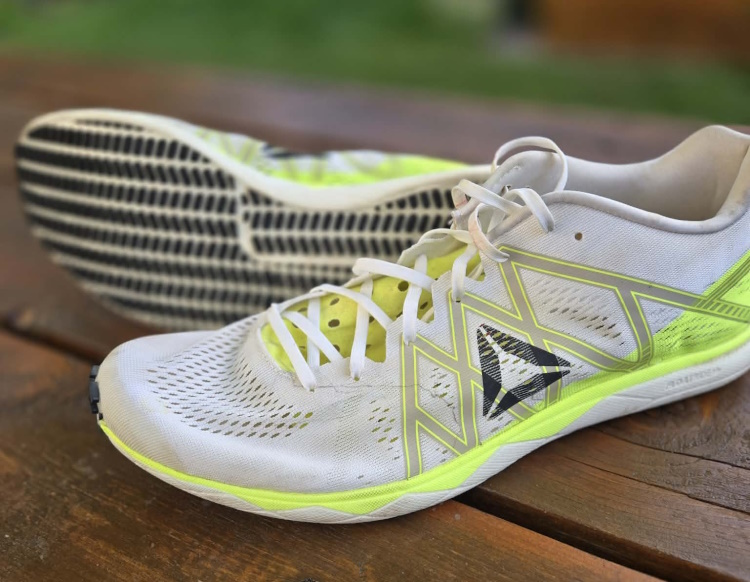
Reebok Floatride RunFast Pro 2
Nike introduced the first Zoom Vaporfly shoe in 2017.
Do Carbon “Super Shoes” Wear Out Faster? In many cases, yes.
Carbon-plated super shoes are designed primarily for:
Durability is often secondary.
Most super shoes use highly compliant, ultra-light foams such as:
These foams provide tremendous energy return, but they are often less durable than traditional daily trainer foams.
The carbon plate itself usually does not “wear out” quickly, but:
Many elite runners report that super shoes lose their best racing feel somewhere between:
Importantly, a super shoe may still function safely beyond that point — it simply may not provide peak race-day performance anymore.
This creates an important distinction:
Performance Lifespan vs Usable Lifespan
A carbon racer might lose its “magic” before it becomes unusable.
Do your research when getting a super shoe for training or racing. Here are some models to evaluate.
Do Thick Modern Foams Last Less Than the Foams in Older Shoe Versions?
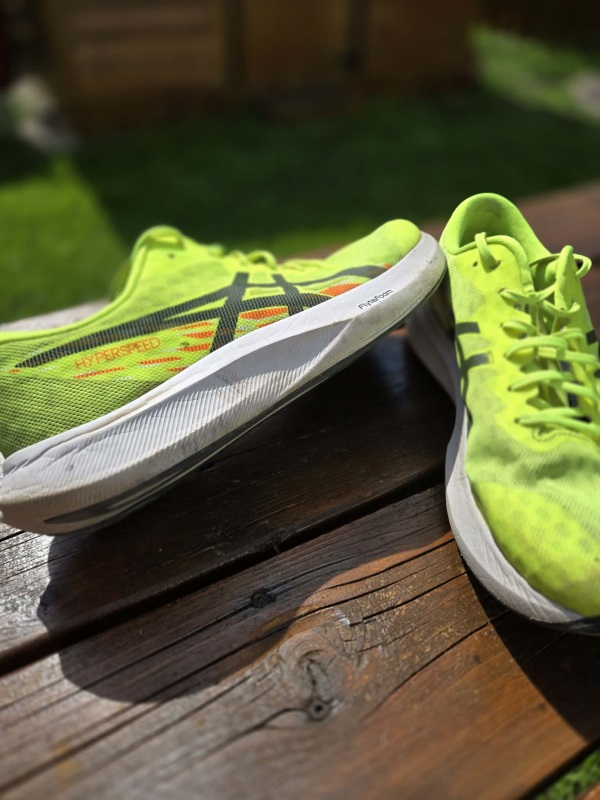
Creases in the Midsole Foam
Sometimes yes — sometimes no.
Modern foams are extremely diverse.
Traditional EVA
Older EVA foams:
TPU Foams
TPU-based foams improved:
Examples included early highly resilient midsoles.
TPU Foams
PEBA and Supercritical Foams
But softer foams may:
High stacked shoes also place more material between the foot and ground, increasing lever effects and instability as wear develops.
The result:
Signs It’s Time to Replace Your Running Shoes
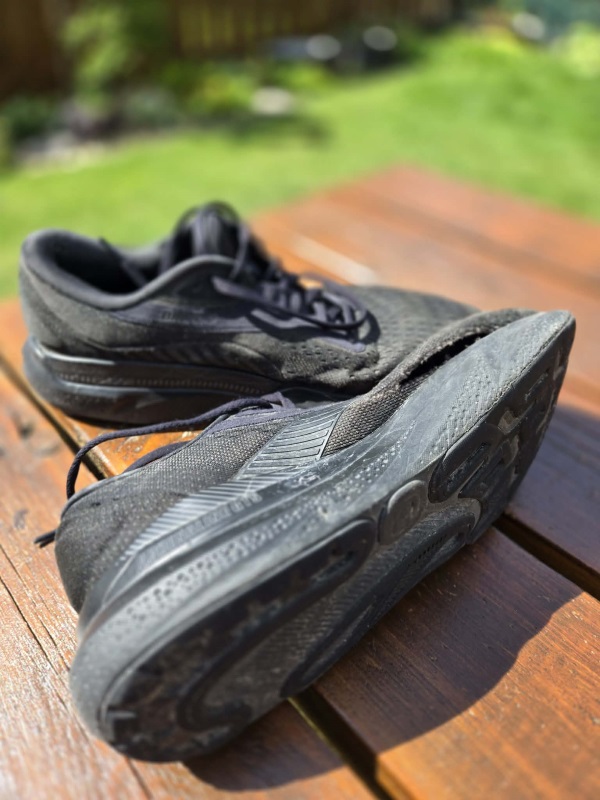
Shoe with worn out torn upper
Mileage alone should not decide replacement.
Instead, runners should watch for functional changes.
Common warning signs:
The shoe feels “dead”
The bounce, smoothness or protection feels reduced.
New aches and pains appear
Especially in:
Uneven wear patterns
One side collapsing more than the other.
Midsole creasing
Deep compression lines may indicate foam fatigue.
Loss of stability
The shoe feels sloppy or unstable during turns or fatigue.
Outsole traction loss
Especially important in wet conditions.
Increased impact sensation
Roads suddenly feel harsher.
Upper deformation
Heel collapse or loose lockdown.
Can Worn-Out Shoes Cause Injury?
Research is mixed.
There is no simple evidence proving old shoes directly cause injuries in every runner.
However, worn shoes can alter:
As cushioning and stability change, runners may subtly adjust gait patterns.
Some runners compensate well.
Others may experience increased stress in:
Importantly, injury risk likely comes from:
Not just the shoe alone.
How to Make Running Shoes Last Longer
Rotate Shoes
Using multiple pairs allows foam recovery between runs.
Research and manufacturer testing suggest some foams rebound better with recovery time.
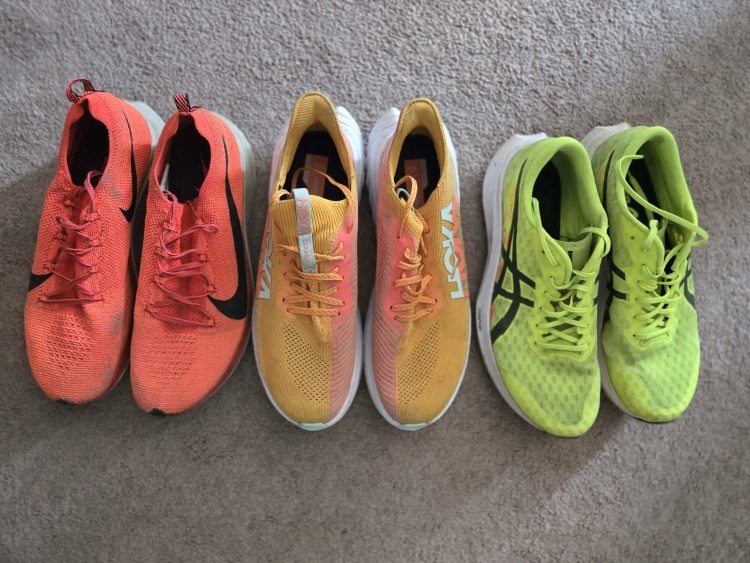
Running Shoe Rotation
Rotation may also reduce repetitive loading patterns.
Avoid Heat
Do not leave shoes:
Heat accelerates foam breakdown and adhesive degradation.
Use Shoes for Their Intended Purpose
Racing shoes are not ideal for daily high-mileage use.
Trail shoes wear quickly on pavement.
Minimal rubber race shoes degrade rapidly on rough surfaces.
Keep Them Clean
Dirt and debris accelerate abrasion and material breakdown.
Heat accelerates foam breakdown and adhesive degradation.
The Future of Shoe Durability
Modern shoes are evolving rapidly.
Brands now face competing goals:
Some shoes are becoming more specialized and disposable.
Others are moving toward:
Future testing may include:
Eventually, runners may know precisely when a shoe has lost performance — not just when it “feels old.”
Final Thoughts
Running shoes do not suddenly die at 800 kilometres.
They gradually evolve.
Some shoes remain excellent well past traditional mileage recommendations.
Others lose performance surprisingly early despite looking visually intact.
The key is learning to evaluate:
Modern super shoes have changed the conversation. Today, runners must think not only about whether a shoe still works, but whether it still performs the way it was designed to.
And perhaps the biggest lesson is this:-
A shoe’s lifespan is not just about mileage.
It is about how the shoe feels, performs and interacts with the runner wearing it.


Leave a Reply